-1.png?width=134&height=66&name=amwhiz-logo%20(1)-1.png)


When the App Store Has Everything Except the One Thing You Need The Shopify App Store is enormous....
The Moment a Stack of Apps Becomes the Problem, Not the Solution
Public apps are wonderful, right up until they aren't. You add one to solve a problem, then another, then a third to patch the gaps the first two left. Each has a monthly fee. Each slows your store a little. And somehow the thing you actually needed still isn't quite handled.
That's the tipping point where a custom app stops being an indulgence and starts being the cheaper, cleaner option. Knowing when you've reached it saves money and frustration.
Here's how to tell when your business needs a custom Shopify app instead of public apps, from Amwhiz, a Shopify development partner.
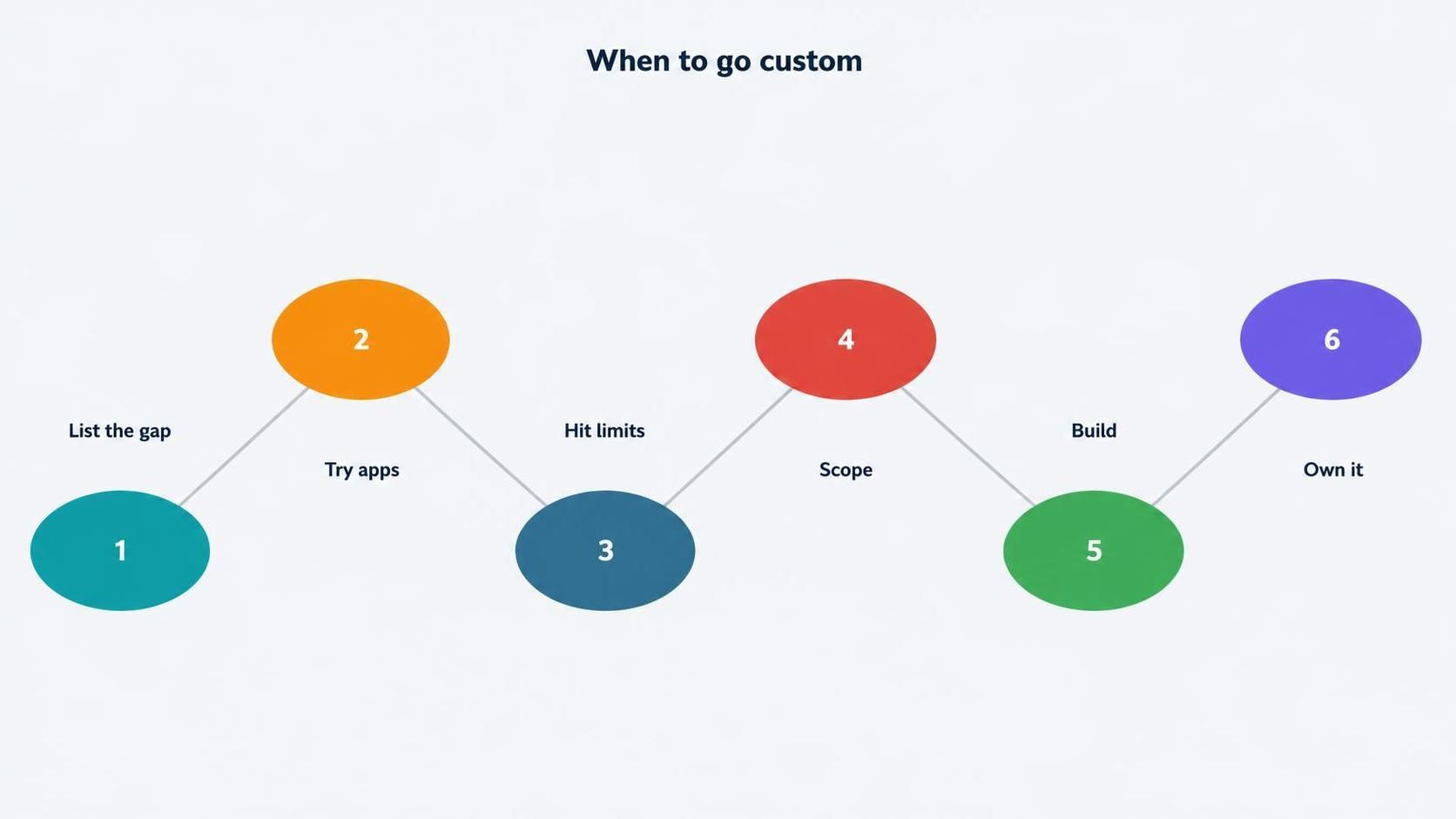
List the gap, try public apps, hit the limits, scope custom, build it, own it.
Sign One: No App Actually Does It
The most obvious sign is the simplest. You've searched the App Store thoroughly, and nothing does what you need. Maybe your requirement is too specific, too unusual, or too tied to how your particular business works. When the app genuinely doesn't exist, custom is the only way to get it.
Sign Two: You're Living on Workarounds
Sometimes an app almost does the job, so you make it work with a manual process, a spreadsheet, or some fragile glue. That workaround is a cost, in time, in errors, in frustration, even if it doesn't show on an invoice. When you're spending real effort every week bridging what your apps can't do, a custom app that just does it properly pays for itself.
Sign Three: You've Stacked Too Many Apps
Count your apps and their monthly fees. If you're paying for a pile of them, and especially if several overlap or exist only to patch each other, you may be spending more than a custom app would cost to build, while getting a slower, messier store in return.
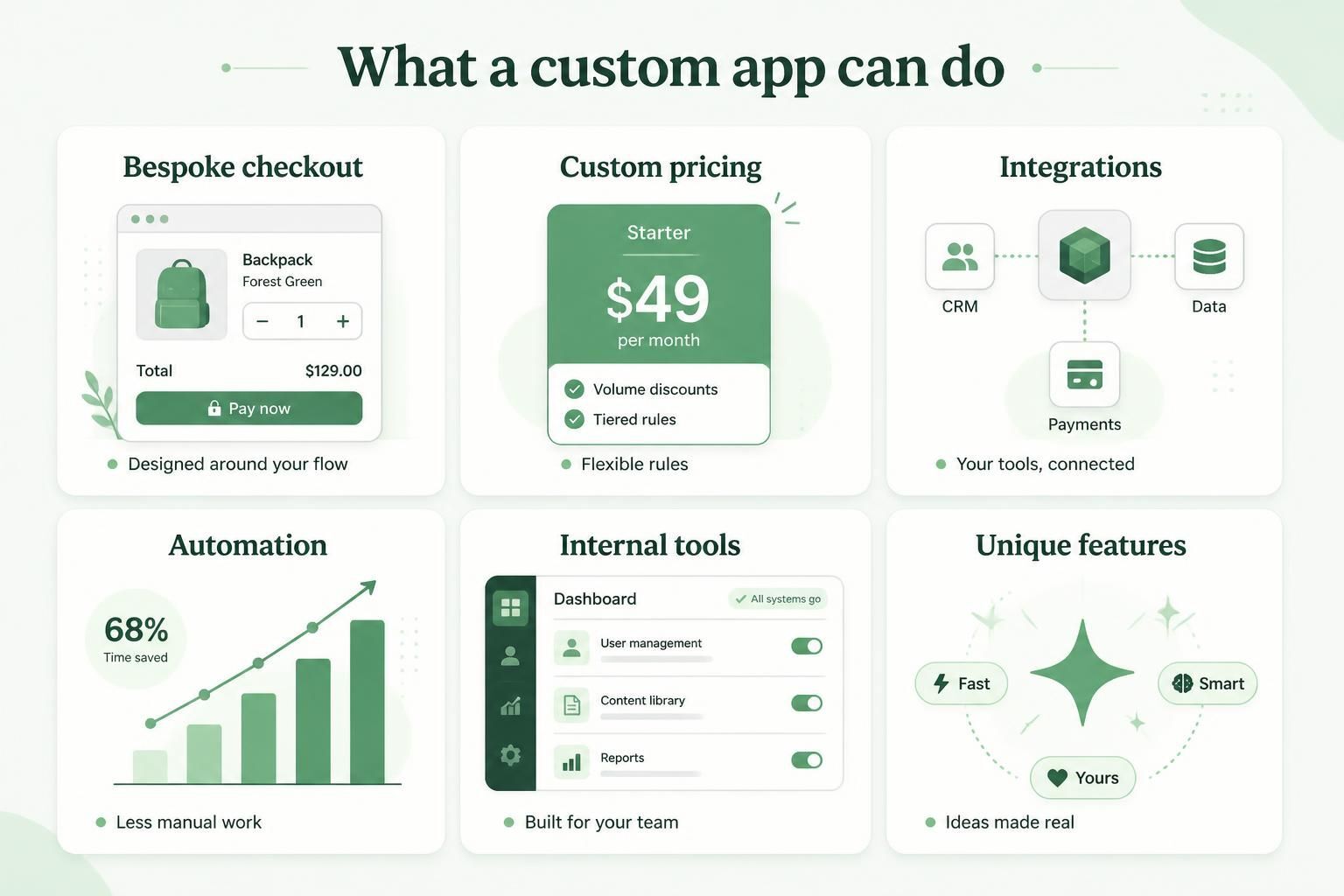
Bespoke checkout, custom pricing, deep integrations, automation, internal tools, and unique features.
Consolidating that app sprawl into one clean custom app is often cheaper to run and much better for performance.
Sign Four: Your Workflow Is Genuinely Unique
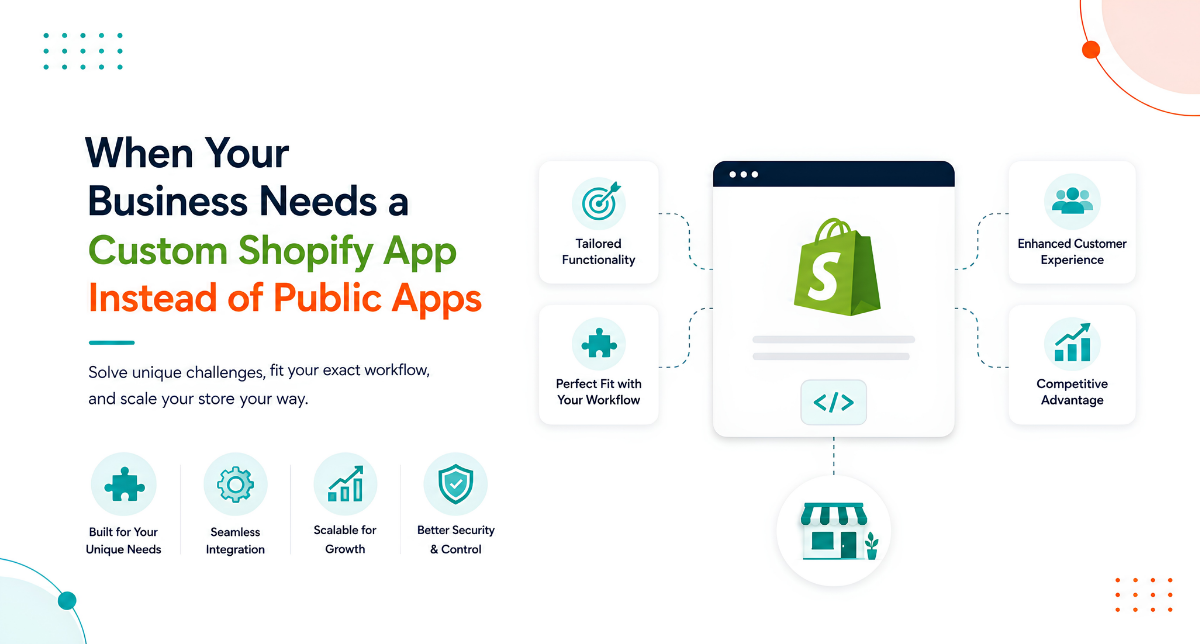
If a core part of how you operate is unusual, a bespoke pricing model, a specific fulfilment process, a unique customer journey, public apps built for the average store simply won't fit. The more central and distinctive the process, the stronger the case for building something shaped around it exactly.
Sign Five: You Need Deep Integration or Scale
Two more signals. First, if you need Shopify to connect deeply with your other systems in ways public apps don't allow, custom development opens that up. Second, if you're scaling fast and public apps are buckling or getting expensive at your volume, a custom app built for your scale can be more reliable and cost-effective. Growth often surfaces limits that were invisible when you were small.
When You Should Stick With Public Apps
To be fair, most stores should stick with public apps. If an app does what you need well, use it, it's cheaper and maintained for you. Custom only makes sense when public apps genuinely fall short. The signs above are about recognising that specific situation, not talking yourself into building for the sake of it.
The Middle Path: Start Public, Go Custom
It's rarely all-or-nothing. Many smart businesses use public apps for as long as they genuinely work, then commission a custom app for the one area where public apps fall short. You get the speed and low cost of public apps where they fit, and the perfect fit of custom exactly where you need it.
This blended approach is often the most sensible. There's no prize for building custom for the sake of it, nor for suffering with workarounds out of stubbornness. Use public apps until they stop serving you, recognise the moment honestly, then build custom for the part that matters. That progression keeps your costs sensible and your store fast while still getting you exactly what you need.
How Amwhiz Helps You Decide
Amwhiz is a Shopify development partner, and we help businesses work out whether they've genuinely outgrown public apps. We look at your app stack, your workarounds, and your workflow, and give you an honest answer. If public apps still serve you, we'll say so.
When custom is the right call, we build an app that removes the workarounds, consolidates the sprawl, and fits your business exactly. The goal is the option that genuinely serves you, not the biggest project.
Frequently Asked Questions
How do I know I need a custom app?
When no public app does what you need, you're relying on workarounds, you've stacked too many overlapping apps, or your workflow is genuinely unique.
Can a custom app replace several public apps?
Often yes. Consolidating an expensive, overlapping app stack into one clean custom app is usually cheaper to run and better for store performance.
Is custom always better than public apps?
No. Most stores should use public apps where they work well. Custom only makes sense when public apps genuinely fall short of your needs.
Does scale change the decision?
Yes. Growth often surfaces limits public apps didn't show when you were small, and a custom app built for your volume can be more reliable and cost-effective.
Will you tell me honestly if I don't need custom?
Yes. If public apps still serve you, we'll say so. We recommend the option that genuinely fits, not the biggest build.
The Short Version
Your business needs a custom Shopify app when no public app does the job, you're living on workarounds, you've stacked too many overlapping apps, your workflow is unique, or you need deep integration and scale. Otherwise, stick with public apps. The skill is recognising which situation you're actually in.
Book a free custom app assessment.
Amwhiz will tell you honestly whether you've outgrown public apps. Visit amwhiz.com or email sales@amwhiz.com.