-1.png?width=134&height=66&name=amwhiz-logo%20(1)-1.png)


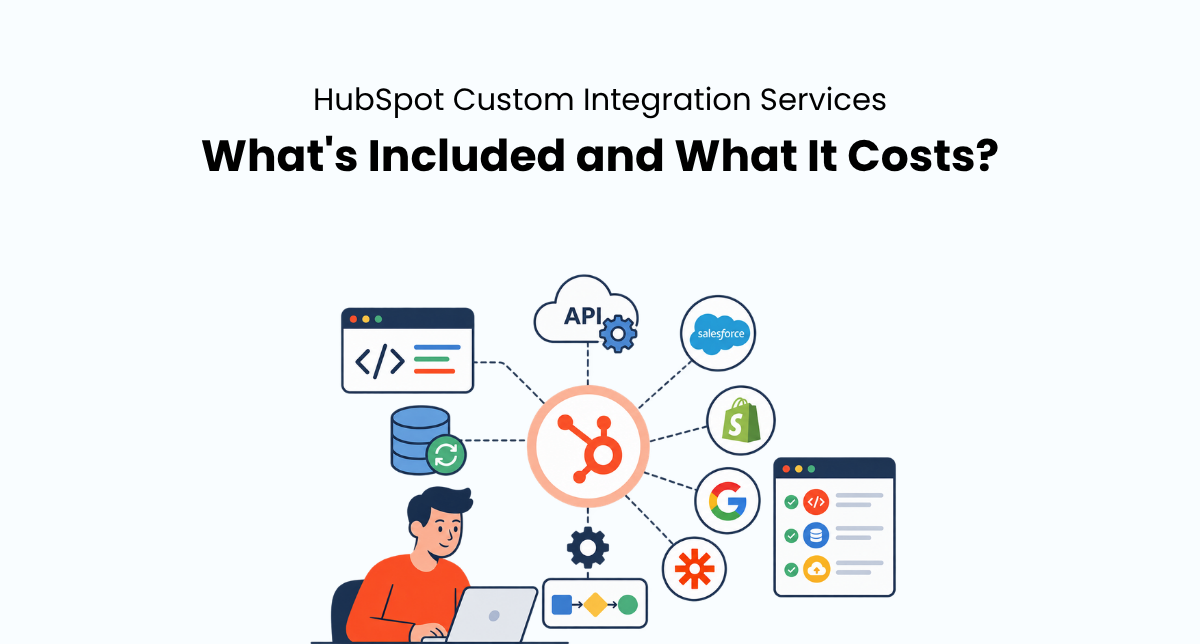

UK businesses building a custom HubSpot integration typically pay somewhere between £2,500 for a...
HubSpot custom integration services typically cost somewhere between a few thousand dollars for a simple two-system sync and the low-to-mid five figures for a multi-system, high-volume build, the number depends almost entirely on scope, not on who you hire. Amwhiz scopes every HubSpot custom integration project against the same core variables, and this post breaks down exactly what drives the price and what a typical engagement includes from discovery to launch.
What's Included in HubSpot Custom Integration Services, and What Does It Cost?
The Short Answer
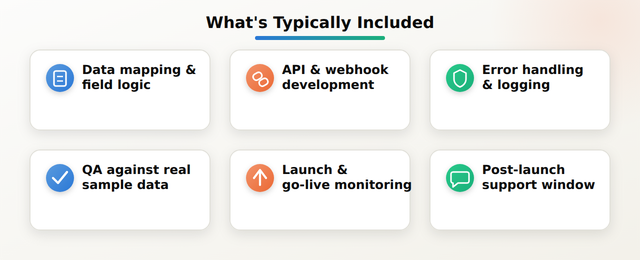
HubSpot custom integration services typically include discovery and data mapping, API/webhook development, error handling and logging, testing, and a post-launch support window. Pricing commonly ranges from around $3,000-$8,000 for a simple single-system sync to $15,000-$40,000+ for multi-system or high-volume builds with custom objects and complex logic, plus an optional ongoing maintenance retainer.
What Drives the Price of a Custom HubSpot Integration
Four variables account for most of the cost variation between projects: the number of systems being connected, whether custom objects or non-standard properties are involved, data volume and required sync frequency, and how much conditional business logic sits between the two systems. A simple "create a contact when a form is filled out elsewhere" build is inexpensive. A build that reconciles inventory, pricing, and order status across HubSpot, Shopify, and a warehouse system in near-real time is a different scale of project entirely.
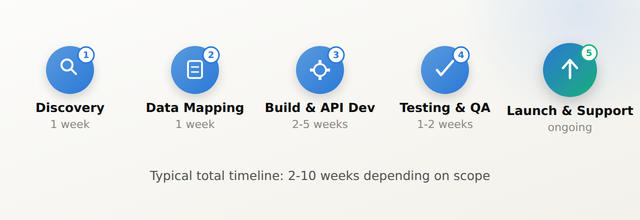
What's Included at Each Stage
A well-scoped project isn't just "write the code." A typical engagement runs through discovery (mapping which fields, objects, and triggers matter), technical design, development against HubSpot's API and webhooks, QA against real (or realistic sample) data, and a launch window with monitoring. Amwhiz's custom integration services include all five stages as standard, not as separate line items you have to negotiate for.
What's Typically Excluded (and Costs Extra)
Most quotes exclude a few things by default: ongoing maintenance beyond the initial support window, changes to scope discovered mid-build (a new object or system added after kickoff), and third-party API or middleware licensing fees if your stack requires one. Ask any integration partner to state these explicitly in the proposal rather than assuming they're bundled.
- Ongoing maintenance retainers are usually quoted separately, often as a monthly fee tied to system complexity.
- Mid-project scope changes (new systems, new objects) are typically re-scoped rather than absorbed.
- Third-party middleware or API subscription costs are passed through, not marked up as part of the build fee.
Fixed-Fee vs. Time-and-Materials Pricing
Custom integrations are quoted either as a fixed fee (a set price for defined scope) or time-and-materials (hourly/weekly rate against an estimated range). Fixed-fee works well when requirements are clear upfront; time-and-materials suits projects where scope is likely to evolve during discovery. A reasonable partner will tell you which model fits your project and why, rather than defaulting to whichever is easier to invoice. You can see how this plays out in practice in Amwhiz's Apollo.io-to-CRM integration case study, where scope was defined tightly enough to quote as a fixed fee.
How Amwhiz Helps
Amwhiz provides HubSpot custom integration services with transparent, scope-based pricing, we walk through discovery with you before quoting, so the number you get reflects your actual systems and data, not a generic package. Every engagement includes mapping, development, QA, and a defined support window as standard.
Frequently Asked Questions About HubSpot Custom Integration Pricing
How much does a custom HubSpot integration typically cost?
Simple single-system integrations commonly run $3,000-$8,000. Multi-system or high-volume builds with custom objects and complex logic typically range from $15,000-$40,000 or more, depending on scope.
Is HubSpot custom integration pricing fixed-fee or hourly?
Both models are common. Fixed-fee suits well-defined scope; time-and-materials suits projects where requirements may evolve during discovery. A good partner will recommend the model that fits your project.
What's included in a typical HubSpot custom integration quote?
A typical quote includes discovery and data mapping, API/webhook development, error handling and logging, QA testing, launch support, and a defined post-launch support window.
What isn't included in a standard quote?
Ongoing maintenance beyond the initial support window, mid-project scope changes, and third-party middleware or API licensing costs are usually quoted separately.
How long does a custom HubSpot integration take to build?
Simple integrations typically take 2-4 weeks end-to-end. More complex, multi-system builds commonly take 6-10 weeks depending on scope and testing requirements.
Do I need a HubSpot developer account or API access before getting a quote?
No, most partners can scope and quote a project based on a discovery call and a look at your current systems. API access is set up during the technical design phase, not before.
Conclusion
The cost of a custom HubSpot integration is driven by scope, not guesswork, systems connected, data volume, custom objects, and business logic complexity. Getting a clear, itemized quote against those variables is the best way to compare options and avoid surprise costs mid-project.
Amwhiz scopes and builds custom HubSpot integrations with transparent, itemized pricing based on your actual systems and requirements. Visit amwhiz.com or email sales@amwhiz.com to get started.