-1.png?width=134&height=66&name=amwhiz-logo%20(1)-1.png)


Introduction Choosing the right storefront architecture plays a major role in how your ecommerce...
written by: Renuka M
Cutting to the Chase
Shopify headless commerce, built with Hydrogen (Shopify's React-based framework) and hosted on Oxygen, earns its cost for high-traffic stores that genuinely need maximum frontend flexibility and speed, typically running Rs. 3,00,000-Rs. 15,00,000+ to build and keep maintained. For most small and mid-size stores, a well-executed customized Shopify theme gets you 90% of the performance benefit at a fraction of the price, which is exactly why Amwhiz builds standard stores at Rs. 45,000 instead of pushing everyone toward headless by default.
What "Headless" Actually Means
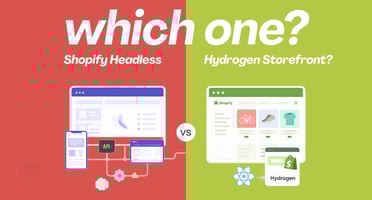
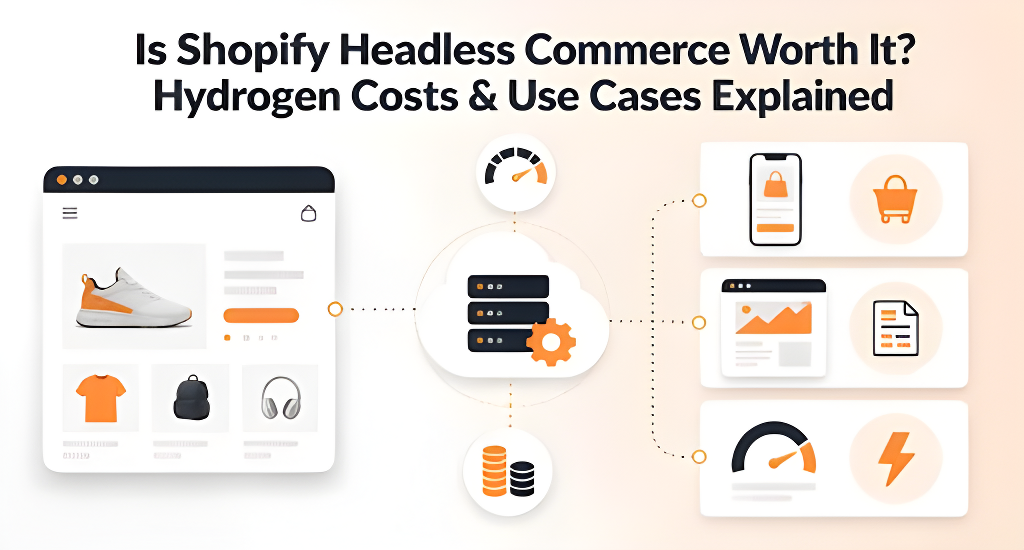
In a traditional Shopify store, the theme and Shopify's backend are tightly coupled. Liquid templates render straight from Shopify's data. In a headless architecture, the frontend gets completely decoupled: you build a custom storefront, usually in React using Hydrogen, that talks to Shopify purely through APIs, while Shopify still runs checkout, inventory, and order management behind the scenes.
That decoupling hands you total control over the frontend experience. It also means you're now responsible for building and maintaining that frontend from scratch, instead of customizing something that's already proven itself.
What Hydrogen and Oxygen Actually Cost
Hydrogen itself is free and open-source, no licensing fee attached. The real cost sits in development time. Building a custom storefront from scratch needs a React/Remix development team, and that typically runs Rs. 3,00,000-Rs. 15,00,000+ depending on complexity, plus ongoing maintenance as the framework keeps changing underneath it.
Oxygen, Shopify's hosting platform for Hydrogen storefronts, comes included with Shopify Plus but can carry extra costs on other plans. Budget for hosting, CDN, and monitoring as recurring line items beyond just the initial build.
When Headless Commerce Is Actually Worth It
- Very high traffic volumes, where every 100ms of load time measurably moves the conversion needle at scale.
- Complex, highly custom UX that Liquid templating genuinely can't support, think immersive product configurators or navigation that doesn't fit any standard pattern.
- Omnichannel frontend needs, powering a website, an app, and a kiosk experience off one shared backend.
- An in-house engineering team that can maintain a custom React codebase for years, not just build it once and walk away.
When It's Overkill (Most Stores)
For the vast majority of stores, ones under a few million dollars in annual revenue without an in-house engineering team sitting around, headless brings cost and maintenance weight without a return to match. A well-optimized Shopify theme, properly customized, already gets you:
- Fast load times, using Shopify's built-in CDN and Online Store 2.0 architecture.
- Strong Core Web Vitals scores, when it's built cleanly without a pile of bloated apps.
- Full design flexibility, right there inside Liquid's section and block system.
- Far lower maintenance cost, since Shopify handles the core platform updates for you.
This is the tier Amwhiz operates in: a conversion-optimized, customized theme build for Rs. 45,000, delivered in 7 days, no six-figure headless investment required to get there.
Cost and Complexity Comparison
| Customized Theme (Amwhiz) | Headless (Hydrogen) | |
| Typical cost | Rs. 45,000 | Rs. 3,00,000 – Rs. 15,00,000+ |
| Timeline | 7 days | 2-6 months |
| Maintenance | Low (Shopify-managed) | High (custom codebase) |
| Best for | Small-mid stores, most catalogs | High-traffic, highly custom UX |
| Team required | None ongoing | In-house or retained dev team |
The Real Question to Ask
Before you even entertain headless, ask yourself one thing honestly: is there a specific frontend limitation a customized theme genuinely can't solve? If the real answer is "no, I just want it faster and a bit more unique," a well-built theme customization almost always closes that gap, minus the six-figure investment and the years-long engineering commitment headless drags along with it.
A Common Trap: Chasing Headless for the Wrong Reasons
Here's a pattern that comes up constantly: a competitor's site feels faster or looks more polished, and headless gets blamed, or credited, as the reason. In reality, most fast, polished storefronts are running on a well-optimized standard theme, not a headless build at all. Before you commit budget toward Hydrogen, get a developer to actually audit what's making that competitor's site feel fast. Image optimization, a minimal app count, clean code underneath it all, these explain the difference far more often than the underlying architecture ever does.
What a Genuine Headless Candidate Looks Like
A store that's an actual strong candidate for headless commerce usually already has an in-house or retained engineering team, processes real traffic where marginal speed improvements translate into measurable revenue at scale, and has a specific, well-defined frontend need, a highly interactive product configurator, say, or one backend powering several distinct frontend experiences, that Liquid and JSON templates genuinely can't handle. If none of that describes where you're at right now, the smarter move is investing in a solid customized theme today, and revisiting headless later if your business actually gets there.
Frequently Asked Questions
Is Hydrogen free to use?
Yes, Hydrogen itself is open-source and free. The cost lives in the custom development needed to build and maintain a storefront on top of it.
Does headless commerce guarantee faster page speeds?
No, not automatically. A poorly built headless store can end up slower than a well-optimized theme. Speed comes from good engineering, not from the architecture you picked.
Can I switch from a standard theme to headless later?
Yes. Plenty of stores start with a customized theme and move to headless once traffic and revenue actually justify the investment. There's no reason to over-invest upfront just in case.
Does Amwhiz build headless stores?
Amwhiz's core offering is customized theme development at Rs. 45,000 in 7 days, which fits the vast majority of stores. Headless projects get scoped separately when there's a genuine need for one.
Can a standard Shopify theme really match headless performance?
For most stores, yes. A cleanly built, well-optimized theme with a lean app stack gets you fast load times and strong Core Web Vitals without dragging in the complexity of a fully custom frontend.
At what revenue level does headless typically start making sense?
There's no fixed number, but it's generally worth evaluating once you've got dedicated engineering resources and traffic volumes where marginal frontend speed gains actually show up in revenue.
Build for Where You Actually Are
Most stores don't need headless commerce. They need a fast, conversion-focused Shopify store built right the first time. Amwhiz delivers exactly that for a flat Rs. 45,000 in 7 days. Reach out before committing to a six-figure headless build you probably don't need yet.