-1.png?width=134&height=66&name=amwhiz-logo%20(1)-1.png)


Three Platforms, Three Different Bets on What "Automation" Should Feel Like
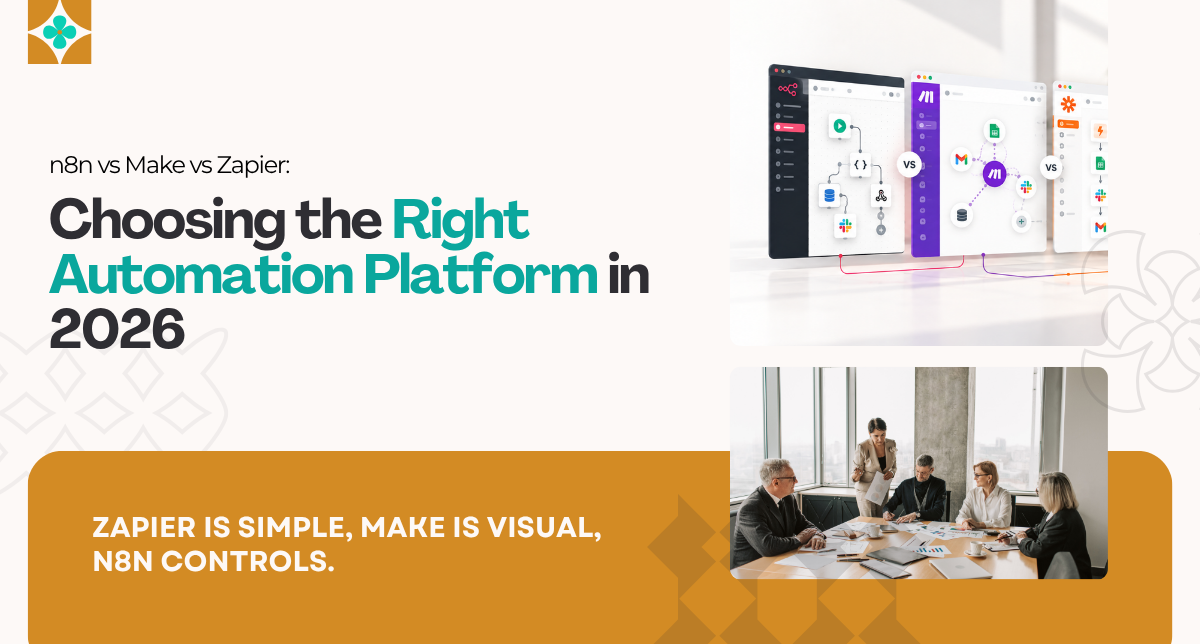
Every automation platform makes a bet about who's building the workflow and how complex it's allowed to get. n8n vs Make vs Zapier isn't a question with one right answer, it's a question of which bet matches your team. Amwhiz works across all three for different clients, and this comparison covers what actually separates them in 2026, past the marketing pages.
Which Automation Platform Should You Choose?
The Short Answer
Choose Zapier for the fastest setup on simple, low-volume automations with mainstream apps. Choose Make when you want a visual workflow builder with more flexibility than Zapier but still prefer a fully managed cloud platform. Choose n8n when you need self-hosting for data control, expect high enough volume that per-task pricing becomes expensive, or need custom code steps and complex branching logic that the other two handle less gracefully. All three can connect HubSpot, Shopify, and Zoho; the difference is in pricing model, hosting control, and how much complexity the workflow itself is allowed to have.
Pricing Model
Zapier and Make both charge based on usage, tasks for Zapier, operations for Make, which scales the bill up directly with volume. n8n's cloud plans use a similar model, but self-hosted n8n has no per-execution cost beyond server hosting, which stays flat regardless of volume. For a handful of low-volume automations, the difference barely matters. For a business running thousands of executions a month, it's often the deciding factor.
Self-Hosting and Data Control
n8n is the only one of the three with a genuine self-hosted option, letting data and credentials live on infrastructure you control instead of passing through a third-party cloud. Make and Zapier are cloud-only. For businesses with data residency or compliance requirements, this alone can rule out Make and Zapier regardless of their other strengths.
Handling Complex Logic
Zapier's structure is the most linear of the three, built for straightforward trigger-then-action chains. Make's visual canvas supports more branching and is often considered a middle ground. n8n's node-based editor plus a built-in code step for JavaScript or Python gives it the most headroom for genuinely complex workflows, multi-condition branching, custom data transformations, or calling several APIs in sequence with different logic depending on the response.
Learning Curve and Setup Speed
Zapier is built to get a first automation live in minutes, and it shows. Make requires a bit more setup familiarity but rewards it with more flexibility. n8n has the steepest initial learning curve of the three, particularly around self-hosting, but a well-built n8n workflow tends to be more maintainable long-term because the logic is explicit rather than hidden inside app-specific shortcuts.
App and Integration Coverage
Zapier has the largest app directory of the three, which matters if you're connecting a smaller or more niche tool. Make and n8n both cover the mainstream platforms, HubSpot, Shopify, Zoho, WhatsApp Business, thoroughly, and n8n's HTTP Request node means any app with a public API can be connected even without a pre-built integration, just with more setup effort.
How We Decide for a Client
We start with three questions: how much volume is this workflow expected to run, does the logic need branching or custom code beyond what a simple trigger-action chain supports, and are there data residency or compliance requirements that rule out a cloud-only platform. Low volume and simple logic points to Zapier. Moderate complexity with a preference for staying cloud-based points to Make. High volume, complex logic, or data control requirements points to n8n.
How Amwhiz Helps
Amwhiz builds on whichever of these platforms actually fits the workflow, rather than defaulting to one tool for every client. If you're not sure which platform makes sense for your team's volume and complexity, we can walk through your current automation needs and recommend a fit before any build starts.
Frequently Asked Questions About Automation Platforms
Can I switch platforms later if my needs change?
Yes, though it requires rebuilding the workflow logic on the new platform rather than a direct import. Starting with the platform that fits your current and near-term volume reduces how often this becomes necessary.
Is n8n only for technical teams?
No. n8n's visual editor is accessible to non-developers for most workflows. The code step is optional and only needed for logic that pre-built nodes don't cover, which is a minority of use cases.
Which platform is cheapest for a small business just getting started?
For a handful of simple, low-volume automations, Zapier's free or entry-level plan is usually the fastest and cheapest way to get started. The calculation changes as volume and complexity grow.
Does Make support self-hosting like n8n does?
No. Make is a cloud-only platform. Self-hosting is currently a differentiator specific to n8n among these three.
Can these platforms be used together?
It's uncommon but not impossible, some businesses run Zapier for a few simple, low-stakes automations while using n8n for their core high-volume or high-complexity workflows. We generally recommend consolidating on one platform where practical to reduce maintenance overhead.
Conclusion
There's no universal winner between n8n, Make, and Zapier in 2026, only a better fit for a given team's volume, complexity, and data control needs. The mistake we see most often is a business staying on whichever platform they started with long after their needs outgrew it.
If your automation costs or complexity have grown past what your current platform was built for, it's worth reassessing before your next renewal.
Book a free consultation to find the right automation platform for your team.
Amwhiz is a certified HubSpot, Shopify, and Zoho implementation partner that also builds custom n8n automations for content, sales, and ops workflows. Visit our integration services page or email sales@amwhiz.com to get started.