-1.png?width=134&height=66&name=amwhiz-logo%20(1)-1.png)



Best Ecommerce Platforms for Wholesale Distribution in the Middle East The Middle East wholesale...
written by: Renuka M
B2B Ecommerce,
TradeBridge,
Shopify Marketplace,
Multi Vendor Marketplace,
Ecommerce Marketplace,
Online Marketplace
What Is a Multi Vendor Marketplace? Complete Beginner Guide
A multi vendor marketplace is an ecommerce platform where multiple independent sellers list and sell their products in one shared online store while the platform owner manages the overall system.
Instead of one business selling products directly to customers, a marketplace connects many sellers and many buyers in one unified platform.
Popular examples include Amazon and Alibaba, where thousands of vendors operate under a single ecommerce ecosystem.
In this guide, you will learn what a multi vendor marketplace is, how it works, and why it is becoming the future of ecommerce in 2026.
What Is a Multi Vendor Marketplace
A multi vendor marketplace is an online platform that allows:
- Multiple sellers to register and sell products
- Buyers to purchase from different sellers in one checkout
- A platform owner to manage commissions, payments, and operations
Each seller operates like an independent business within the same platform.
How a Multi Vendor Marketplace Works
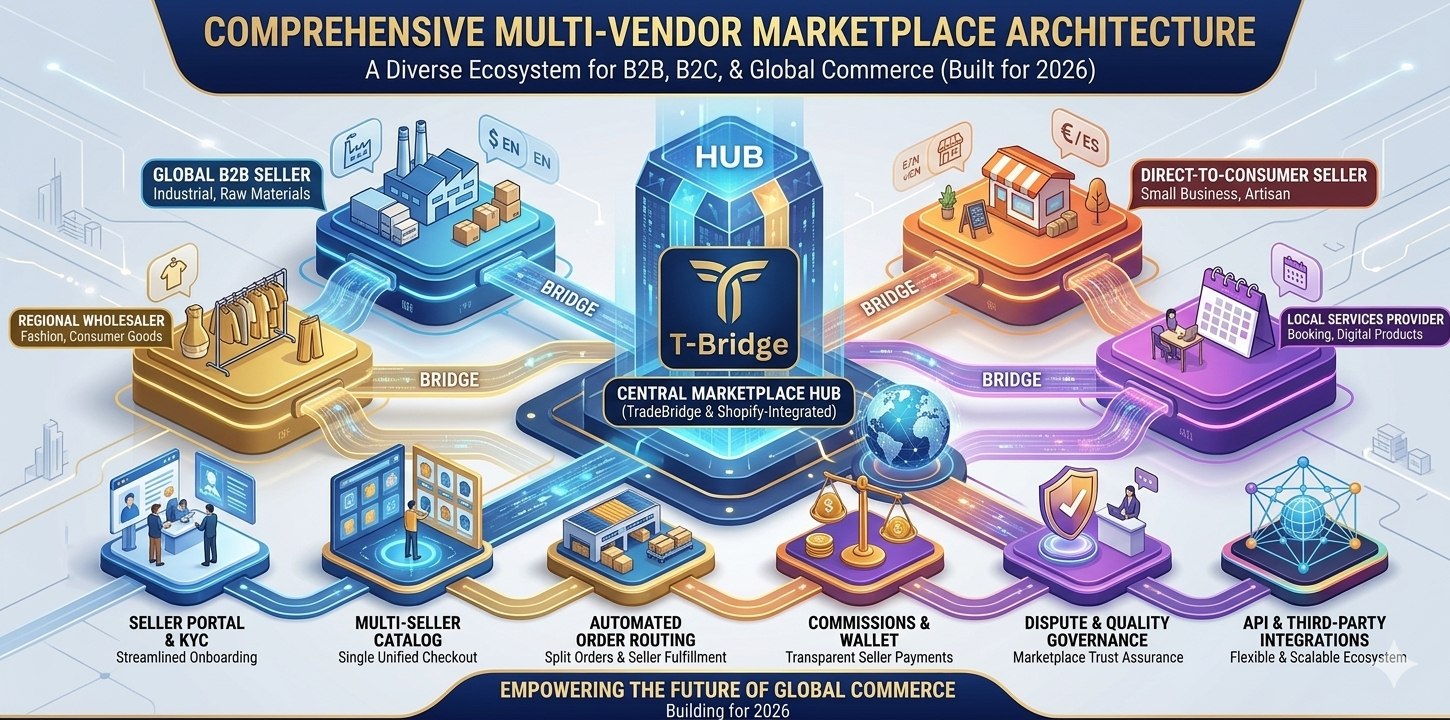
A typical workflow looks like this:
- Sellers register on the platform
- Sellers upload products and manage inventory
- Buyers browse products from multiple sellers
- Buyers place a single order
- The system splits the order based on sellers
- Each seller fulfills their part of the order
- The platform manages payments and commissions
This system creates a shared commerce ecosystem instead of a single store.
Key Features of a Multi Vendor Marketplace
Seller Management
- Seller registration
- KYC verification
- Seller approval workflows
Product Management
- Product listing tools
- Inventory tracking
- Bulk upload support
Order Management
- Multi seller order splitting
- Automated routing
- Shipment tracking
Financial System
- Commission calculation
- Seller payouts
- Wallet management
- Invoice generation
Buyer Experience
- Unified catalog
- Single checkout
- Multiple seller products in one order
Types of Multi Vendor Marketplaces
1. B2C Marketplace
Where businesses sell to consumers.
Example: Amazon
2. B2B Marketplace
Where businesses sell to other businesses.
Example: Wholesale supplier networks
3. Hybrid Marketplace
Combination of B2B and B2C models.
Example: Fashion or electronics platforms
Benefits of a Multi Vendor Marketplace
1. Faster Product Expansion
You do not need to own inventory. Sellers add products for you.
2. Scalable Business Model
More sellers means more products and more revenue.
3. Lower Operational Cost
Inventory and fulfillment are handled by sellers.
4. Multiple Revenue Streams
- Commission fees
- Listing fees
- Subscription plans
- Advertising revenue
5. Strong Market Reach
More sellers attract more buyers and vice versa.
Challenges of Multi Vendor Marketplaces
- Managing multiple sellers
- Ensuring product quality
- Handling disputes and returns
- Complex commission structures
- Logistics coordination
This is why platforms need strong marketplace infrastructure.
Technology Behind Multi Vendor Marketplaces
Modern marketplaces are built using scalable technologies such as:
- Node.js backend systems
- React frontend frameworks
- PostgreSQL databases
- API-based architectures
- Cloud storage solutions
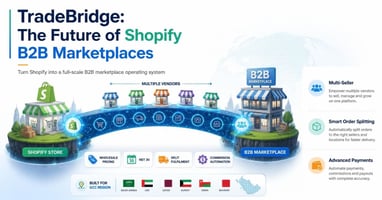
Platforms like TradeBridge by Amwhiz Media Private Limited extend Shopify into a full multi vendor B2B marketplace system with:
- Seller portals
- Buyer portals
- Commission automation
- Order splitting
- Wallet and payout systems
Who Should Build a Multi Vendor Marketplace
- Wholesale distributors
- B2B suppliers
- Fashion marketplaces
- Electronics trading platforms
- FMCG distribution networks
- Regional ecommerce platforms
Future of Multi Vendor Marketplaces in 2026
- AI-driven product recommendations
- Automated pricing systems
- WhatsApp-based commerce workflows
- Credit-based B2B transactions
- Regional localized marketplaces
Multi vendor systems are becoming the backbone of global ecommerce growth.
Conclusion
A multi vendor marketplace is not just an ecommerce website. It is a complete digital ecosystem where multiple sellers and buyers interact through a shared platform.
It enables scalable growth, diversified revenue, and faster market expansion.
Modern systems like TradeBridge by Amwhiz Media Private Limited make it easier to build and scale such marketplaces on Shopify without enterprise complexity.