-1.png?width=134&height=66&name=amwhiz-logo%20(1)-1.png)


Count the Hours Your Team Spends Copying Data. It Hurts. Somewhere in most businesses, someone is...
Your Store Knows What People Buy. Your CRM Knows Who They Are. They Should Talk.
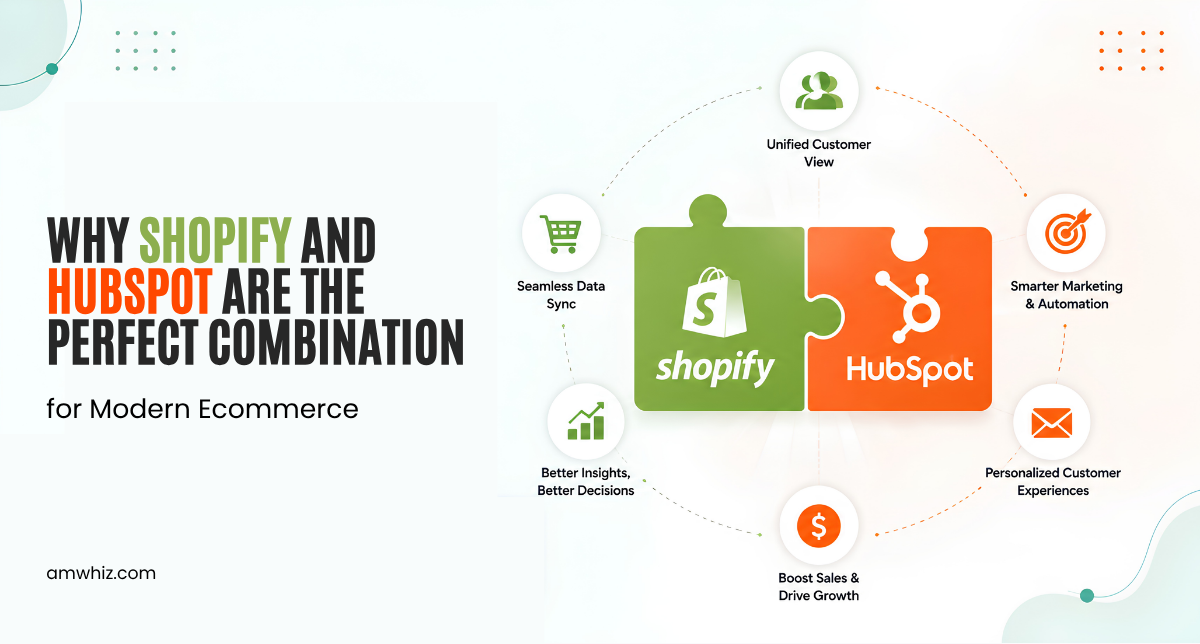
Here's a strange split that most ecommerce businesses live with. Shopify knows exactly what every customer bought, when, and for how much. HubSpot knows who your contacts are, how to reach them, and how to nurture them. And the two barely speak, so you're marketing to people without knowing what they've purchased, and selling without the full customer picture.
Connect them, and something clicks into place. Your store and your CRM become one view of the customer, and marketing finally runs on real buying behaviour.
Here's the complete guide to Shopify and HubSpot integration for ecommerce growth, from Amwhiz, a Shopify and HubSpot partner.
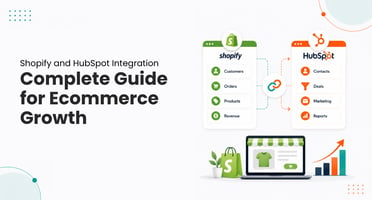
Shopify sells and fulfils; HubSpot markets and nurtures. Together, the store meets the CRM.
What the Integration Actually Does
At its core, integrating Shopify and HubSpot means your store data flows into your CRM. Orders, customers, and products from Shopify appear in HubSpot, so every contact carries their real purchase history, and your marketing and sales work from what people actually do, not guesses.
Once that data flows, a whole set of powerful things become possible, because HubSpot can finally act on real ecommerce behaviour.
Recover Abandoned Carts Automatically
One of the first wins is abandoned-cart recovery. When someone leaves without buying, HubSpot can automatically follow up with a well-timed, relevant message. Those recovered carts are close to free money, sales you'd otherwise have lost, and the integration makes the whole thing automatic.
Market Based on What People Actually Bought
With purchase data in HubSpot, your marketing gets dramatically smarter. You can segment customers by what they bought, target them with relevant offers, and stop sending everyone the same generic email. A first-time buyer, a loyal repeat customer, and someone who hasn't purchased in months should hear from you differently, and now they can.
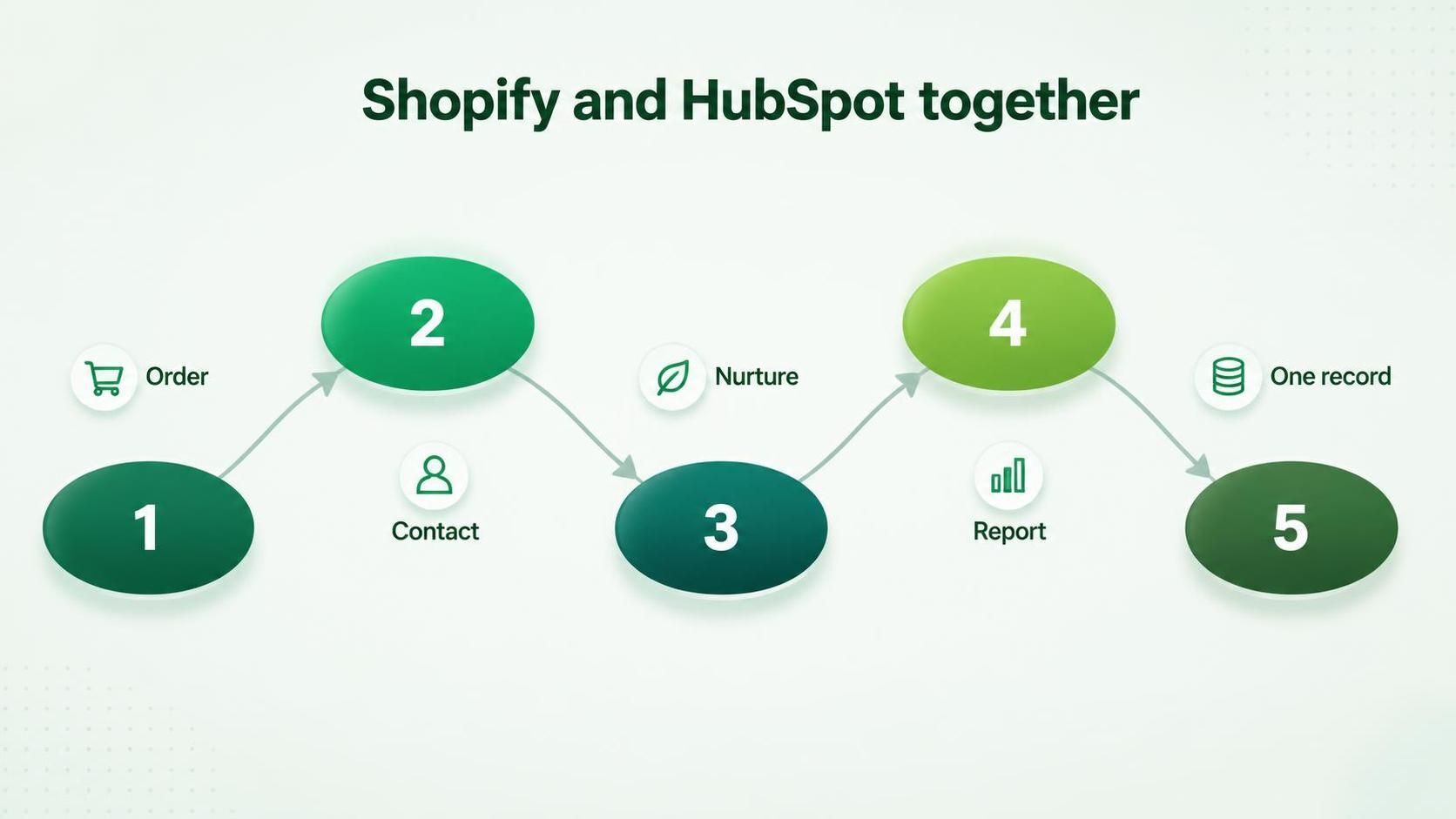
An order in Shopify becomes a contact in HubSpot, nurtured and supported into a repeat purchase.
Build Post-Purchase Journeys
The sale isn't the end; it's the start of the relationship. With the integration, HubSpot can run automated post-purchase journeys: onboarding for new customers, replenishment reminders, cross-sells, and re-engagement for those going quiet. This is how one-time buyers become repeat customers, which is where ecommerce profit really lives.
One View of Every Customer
Perhaps the biggest benefit is a single, complete view of each customer that spans store and CRM. Sales, support, and marketing all see the same picture: what someone bought, how they've engaged, and what they need next. That shared view makes every interaction more relevant and every team more effective.
Getting the Setup Right
The connection between Shopify and HubSpot is straightforward to switch on; getting real value from it takes a little thought. You decide which store events matter, how customers are segmented, and which automations, cart recovery, post-purchase flows, run first. A thoughtful setup turns a technical link into a genuine growth engine.
It also pays to keep the data clean from the start, so a customer is one record across store and CRM rather than duplicated. Getting these decisions right up front is the difference between an integration that quietly drives sales and one that just moves data around. This is exactly where an experienced partner earns their place.
How Amwhiz Connects Shopify and HubSpot
Amwhiz is a Shopify and HubSpot partner, and we connect the two so your store powers your marketing. We set up the integration so orders and customers flow into HubSpot, build abandoned-cart recovery and post-purchase journeys, enable purchase-based segmentation, and give you one view of every customer.
Because we know both platforms well, we make the connection reliable and genuinely useful, not just technically linked. The result is an ecommerce operation where the store and the CRM work as one growth engine.
Frequently Asked Questions
What does Shopify and HubSpot integration do?
It flows your store's orders, customers, and products into HubSpot, so your CRM works from real purchase behaviour and can automate marketing around it.
Can it recover abandoned carts?
Yes. When someone leaves without buying, HubSpot can automatically follow up with a timely, relevant message, recovering sales you'd otherwise lose.
How does it improve my marketing?
With purchase data in HubSpot, you can segment customers by what they bought and send relevant offers instead of generic emails, which lifts results.
Does it help after the sale?
Very much. HubSpot can run post-purchase journeys, onboarding, replenishment, cross-sells, and re-engagement, turning one-time buyers into repeat customers.
Is it hard to set up?
The connection is straightforward; the value comes from configuring it well, with the right automations and clean data flow. A partner makes it genuinely useful, not just linked.
The Short Version
Shopify and HubSpot integration flows your store data into your CRM, unlocking abandoned-cart recovery, purchase-based segmentation, post-purchase journeys, and one complete view of every customer. It turns two disconnected systems into a single ecommerce growth engine.
Book a free Shopify and HubSpot consultation.
Amwhiz will connect your store and your CRM into one growth engine. Visit amwhiz.com or email sales@amwhiz.com.