-1.png?width=134&height=66&name=amwhiz-logo%20(1)-1.png)


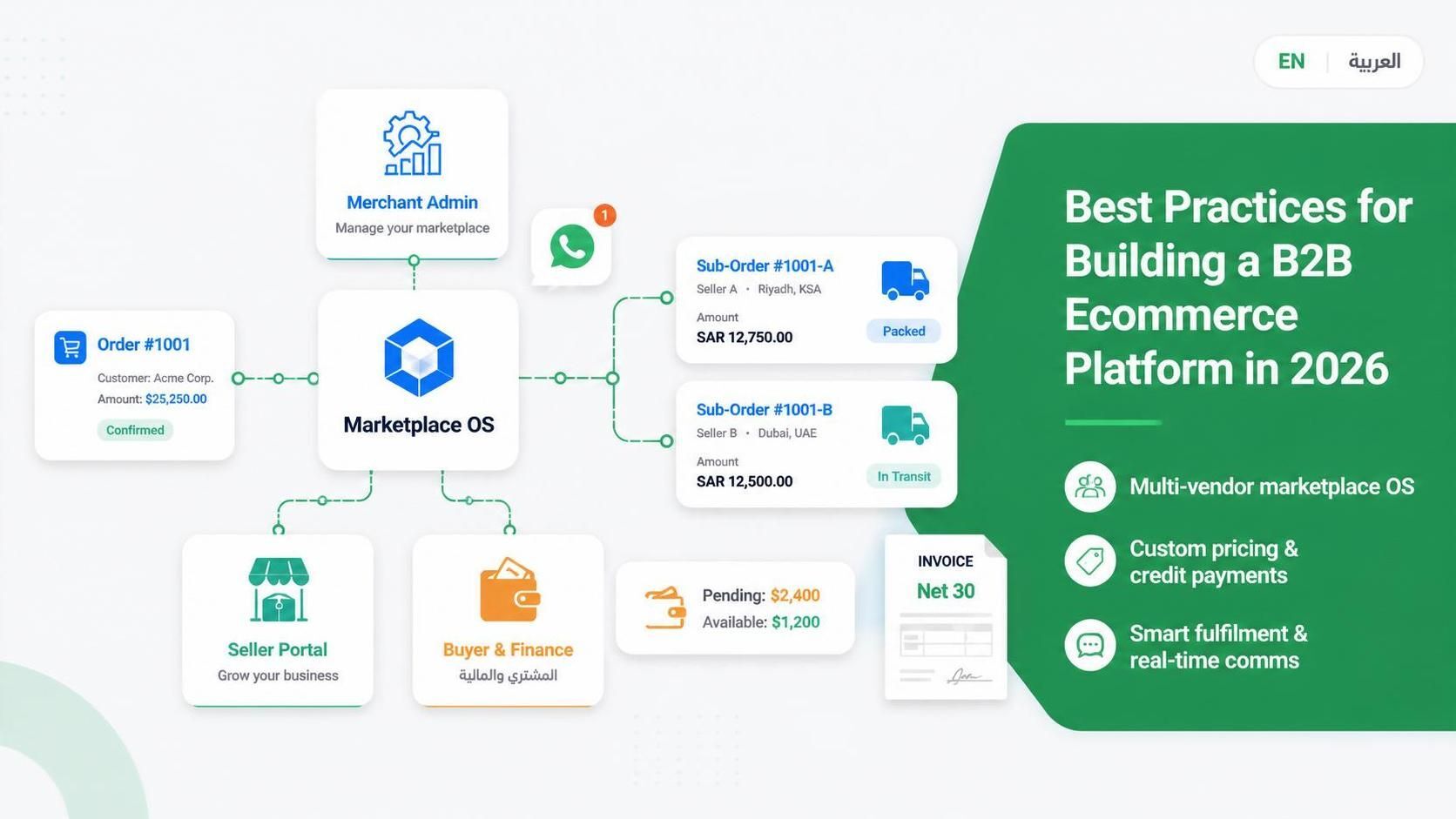

Introduction Generating leads is only the first step in growing a successful B2B ecommerce...
written by: Renuka M
Best Practices for Building a B2B Ecommerce Platform in 2026
In 2026, B2B ecommerce is no longer just about creating an online store for bulk orders. It has evolved into a complex digital ecosystem where buyers, sellers, pricing rules, logistics, and financial workflows must all operate seamlessly in real time.
Businesses today expect more than a product catalog. They expect custom pricing, credit-based payments, multi-vendor access, automated fulfillment, and instant communication across the supply chain.
However, most traditional ecommerce platforms still struggle with these requirements.
This is where modern systems like TradeBridge by Amwhiz Media Private Limited are redefining how B2B ecommerce is built by transforming Shopify into a complete multi-vendor B2B marketplace operating system without requiring Shopify Plus.
In this blog, we will explore the best practices for building a scalable and future-ready B2B ecommerce platform in 2026.
Understand B2B Ecommerce as a Marketplace, Not a Store
One of the biggest mistakes businesses make is treating B2B ecommerce like a traditional online store.
In reality, modern B2B platforms function as:
- Multi-seller marketplaces
- Distributor networks
- Wholesale ecosystems
- Supply chain platforms
A successful system must support multiple business entities operating under one platform with independent workflows.
Build a Multi-Portal System for Scalability
A strong B2B ecommerce platform must separate user roles clearly into different portals.
Merchant Admin Portal
The control center for marketplace operators.
- Seller onboarding and approvals
- Product approval workflows
- Commission configuration
- Order and fulfillment monitoring
- Buyer management
- Analytics and reporting
- Payout management
Seller Portal
- Product creation and bulk uploads
- Inventory tracking
- Order fulfillment management
- Sales analytics
- Wallet and payout tracking
- Return and dispute handling
Buyer Portal
- Company registration and verification
- Tier-based pricing access
- Minimum order quantity enforcement
- Net payment terms (Net 15, Net 30, Net 60)
- Invoice downloads and order tracking
Enable True Multi-Vendor Marketplace Functionality
- Independent seller catalogs
- Seller-specific inventory
- Marketplace-wide product listing control
- Automated commission handling
- Multi-seller analytics
This structure enables platforms to function like real-world distribution networks rather than simple online stores.
Implement Advanced Commission Automation
- Flat commission rates
- Category-based commissions
- Product-level overrides
- Tiered seller structures
- Subscription or listing fees
Automatic calculations should include:
- Payment gateway fees
- Returns deductions
- SLA penalties
Design Smart Order Splitting and Fulfillment
- Automatically split orders by seller
- Create sub-orders for fulfillment
- Track shipments independently
- Sync updates in real time
- Notify sellers automatically
Build Flexible B2B Pricing Models
- Customer-specific pricing
- Tier-based pricing structures
- Volume discounts
- Minimum order quantity enforcement
- Product-level pricing overrides
Buyer tiers:
- Retail
- Reseller
- Distributor
- Key Account
Conclusion
Building a successful B2B ecommerce platform in 2026 requires moving beyond traditional ecommerce and adopting a complete marketplace operating system approach.
- Multi-vendor architecture
- Advanced pricing systems
- Credit-based payments
- Automated fulfillment
- Real-time communication
- Financial transparency
Want to Build a B2B Ecommerce Platform?
If you need implementation, customization, or consulting support, contact the Amwhiz team to get started with TradeBridge powered solutions.