-1.png?width=134&height=66&name=amwhiz-logo%20(1)-1.png)



UK businesses building a custom HubSpot integration typically pay somewhere between £2,500 for a...
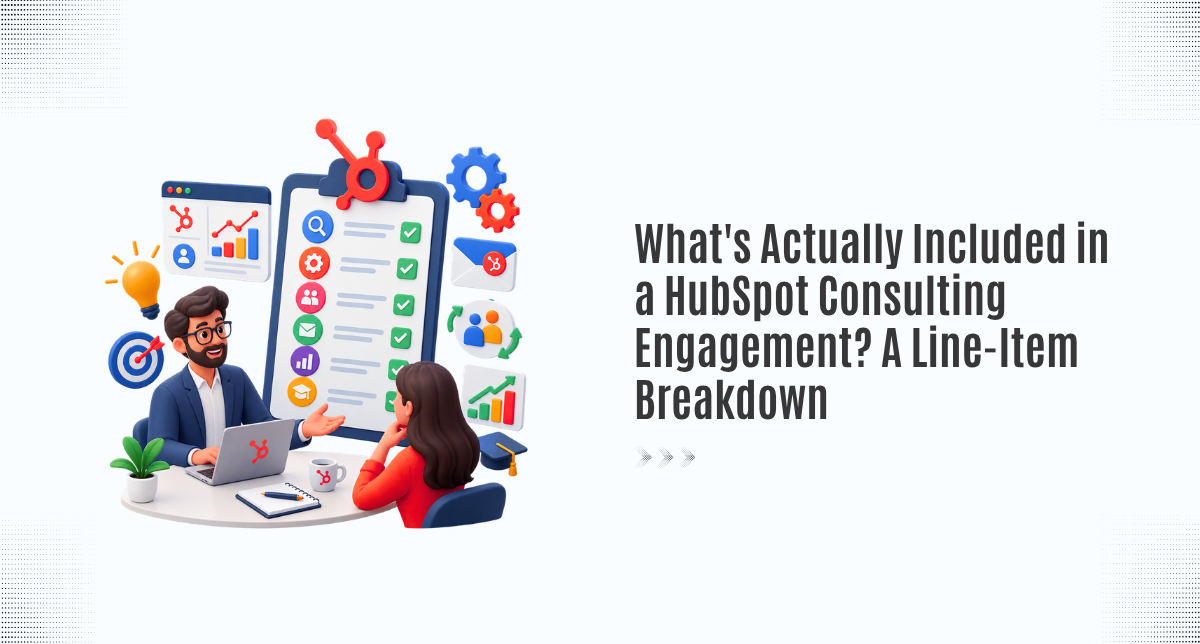
A HubSpot consulting engagement typically includes a portal audit, hub configuration (Marketing, Sales, Service, or Ops), data and pipeline setup, integration work, custom reporting, team training, and a defined period of post-launch support, not just "HubSpot help" billed by the hour. Amwhiz structures every engagement around these line items so clients know exactly what they're paying for before a contract is signed. If you're evaluating a partner, our HubSpot consulting services page outlines the same scope described below.
What's Included in a HubSpot Consulting Engagement?
The Short Answer
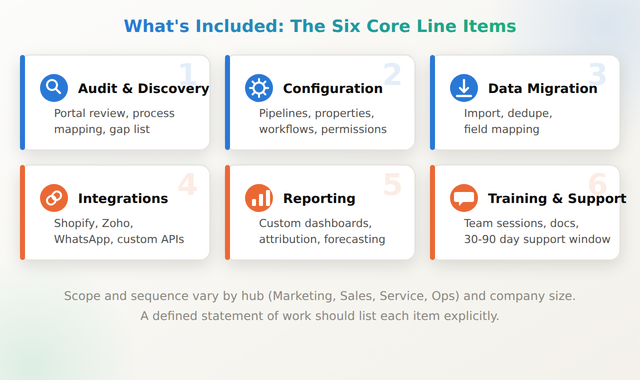
A typical HubSpot consulting engagement covers five to seven core line items: a portal/process audit, hub configuration and workflow build-out, data migration or cleanup, third-party integrations, custom dashboards and reporting, team training and documentation, and a support window (commonly 30-90 days) after go-live. Scope varies by hub and company size, but reputable consultants define each item in the statement of work rather than leaving it open-ended.
The Discovery and Audit Phase
Every well-run engagement starts with discovery, reviewing your current HubSpot portal (or lack of one), your sales and marketing process, and the systems HubSpot needs to talk to. This typically produces a written audit: what's misconfigured, what's missing, and a prioritized build plan. Skipping this step is the single most common reason DIY HubSpot builds and rushed consulting engagements go sideways later.
Configuration: Where Most of the Engagement Time Goes
Configuration is usually the largest line item by hours. It includes deal and ticket pipeline setup, custom properties, lifecycle stage definitions, workflow automation, lead scoring, sequences, and permission structures. A consultant worth hiring will document these decisions rather than clicking through the UI with no record of what was changed or why, that documentation is what makes the system maintainable after they leave. Related reading on the difference between a lighter setup and full configuration: HubSpot Onboarding vs. Implementation: What's the Real Difference?
Data Migration and Integrations
If you're moving off Salesforce, Zoho, Pipedrive, or a spreadsheet-based CRM, migration is its own line item, typically involving field mapping, deduplication, and validation before go-live. Integrations connect HubSpot to the rest of your stack: ecommerce platforms, ERPs, messaging tools, or custom internal systems. Amwhiz's HubSpot custom integration services commonly get scoped as an add-on line item within a broader consulting engagement, particularly for companies syncing HubSpot with Shopify or Zoho. See this HubSpot implementation case study for an example of how these pieces come together in a real engagement.
Training, Documentation, and Post-Launch Support
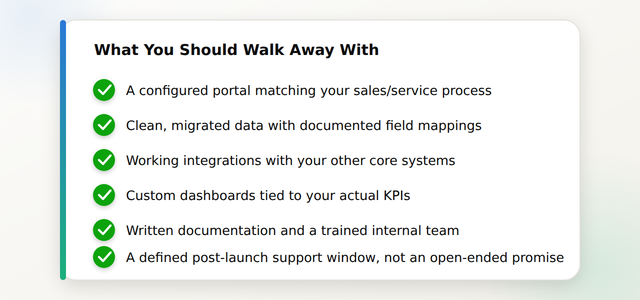
The line item that gets skipped most often, and causes the most regret, is training. A consulting engagement that ends the moment the portal goes live tends to unravel within a few months as staff revert to old habits or misuse new fields. Look for engagements that include structured training sessions, written process documentation, and a defined support window (commonly 30-90 days, sometimes structured as a retainer afterward) rather than a vague "we'll help if you need it."
How Much Should Each Line Item Cost?
Pricing varies widely by hub, company size, and data complexity, but as a general shape: audit and discovery is usually the smallest line item, configuration and data work are the largest, and training/support is priced either as a flat add-on or a short retainer. Ask any consultant to itemize their quote by these categories rather than accepting a single lump-sum number, it's the fastest way to compare proposals apples-to-apples.
How Amwhiz Helps
Amwhiz scopes every engagement as a written, line-itemized plan before work begins, covering audit, configuration, data, integrations, reporting, and training as separate deliverables. Our HubSpot consulting services are built specifically so clients can see what they're paying for at each stage, rather than an open hourly tab.
Frequently Asked Questions About HubSpot Consulting Engagements
What's the difference between HubSpot consulting and HubSpot onboarding?
Onboarding is typically the initial setup phase for a new HubSpot account, focused on getting the basics configured and the team live. Consulting is broader and often ongoing, it can include onboarding as one line item but also covers process redesign, advanced automation, integrations, and continuous optimization after go-live.
How long does a typical HubSpot consulting engagement take?
A focused single-hub engagement commonly takes 4-8 weeks from discovery to go-live. Multi-hub engagements with heavy data migration or several integrations can run 8-16 weeks. Ongoing optimization work is often structured as a monthly retainer after the initial build.
Does a consulting engagement include data migration?
It can, but it should be called out as its own line item rather than assumed. If you're moving from another CRM, confirm migration scope (record volume, custom fields, historical data) is explicitly priced and planned separately from configuration work.
What happens after the engagement ends?
Reputable consultants define a support window (commonly 30-90 days) after go-live to fix issues that surface once the team is actually using the system daily. After that, many clients move to a lighter monthly retainer for ongoing changes rather than re-engaging a full project each time.
Can I just hire a consultant for part of this, like integrations only?
Yes. Many engagements are scoped narrowly, such as just an integration build or just a reporting overhaul, rather than a full portal build. The key is making sure the line items you're not paying for (like training or documentation) are ones you genuinely don't need.
How do I compare quotes from different HubSpot consultants?
Ask each consultant to break their quote into the same line items: audit, configuration, data, integrations, reporting, training/support. A lump-sum number with no breakdown makes it impossible to tell what's actually included, and is the most common source of scope disputes later.
Conclusion
A HubSpot consulting engagement is more than "someone who knows HubSpot", it's a defined scope of audit, configuration, data work, integrations, reporting, and training, delivered against a written plan. Knowing the line items in advance is the best protection against scope creep and vague deliverables.
Amwhiz scopes and delivers HubSpot consulting engagements as clearly itemized projects, not open-ended retainers. Visit amwhiz.com or email sales@amwhiz.com to get started.