-1.png?width=134&height=66&name=amwhiz-logo%20(1)-1.png)


Your Customers Live on Their Phones. Your Store Should Too. Watch how people actually shop. They're...
The Home Screen Is the Most Valuable Real Estate in Retail
Think about the apps on your own phone's home screen. They get opened out of habit, dozens of times a day, without a second thought. Now think about how rarely you type a store's web address into a browser. That contrast is the whole argument for a shopping app: being on the home screen means being top of mind, every day, for free.
In 2026, with shopping more mobile than ever, that real estate is worth fighting for. Here's why a growing number of ecommerce brands are building apps, and whether you should too.
This is why every ecommerce business should consider a mobile shopping app in 2026, from Amwhiz, a Shopify development partner.
.jpeg?width=1672&height=941&name=Duck-ai-image-2026-08-10-07-55%20(1).jpeg)
Push offers, one-tap buying, loyalty, personalisation, speed, and stickiness, your store in a pocket.
Shopping Is Mobile-First, Fully
The shift is complete. Most ecommerce browsing and a huge share of buying now happens on phones. Customers expect to shop from the sofa, in a queue, on the move, effortlessly. A brand that isn't excellent on mobile is invisible to how people actually shop, and an app is the most polished mobile experience you can offer.
This isn't a trend that might reverse. It's the settled reality that every ecommerce decision now has to account for.
Push Notifications Beat the Inbox
Email still matters, but it's crowded and easy to ignore. A push notification is different: it lands on the phone, gets seen, and drives immediate action. For time-sensitive things, a drop, a sale, a restock, that immediacy is gold. Brands that use push well see engagement that email can't touch, precisely because they're reaching people who chose to install the app.
Apps Build Loyalty in a Way Websites Can't
Installing an app is a small act of commitment, and it changes the relationship. App customers tend to buy more often and stay loyal longer. The app becomes a home for loyalty rewards, personalised recommendations, and a sense of membership that keeps people coming back.
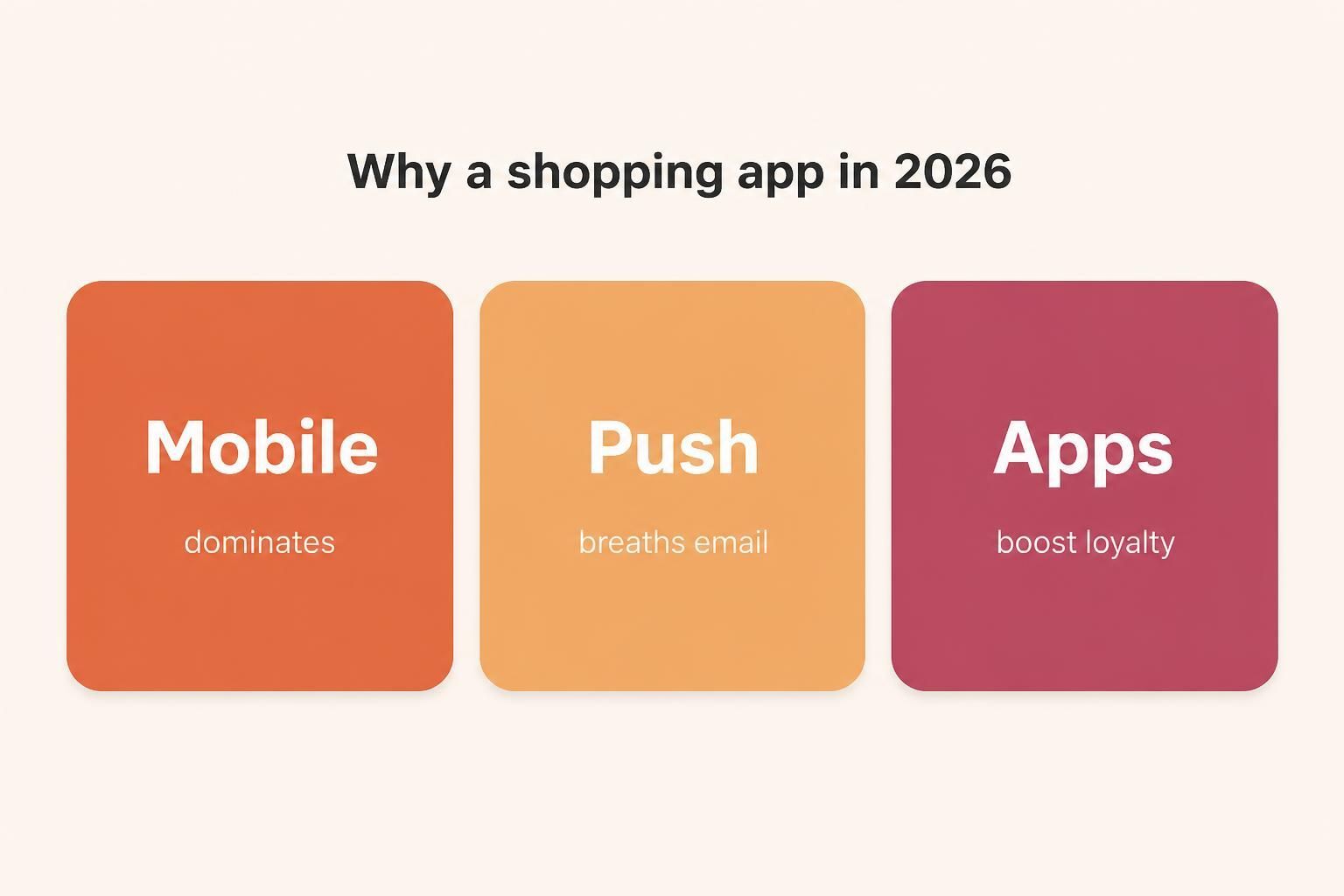
Mobile dominates sales, push beats email, and apps boost loyalty. The case is hard to argue with.
Speed and Convenience Drive Repeat Sales
Apps are faster and smoother than mobile websites, and for repeat customers that convenience is decisive. Saved details, one-tap reorders, and a snappy experience make buying almost frictionless. When it's that easy to buy again, people do, and repeat purchases are where ecommerce profitability lives.
The Honest Caveat
An app isn't automatically right for every store, and it's worth being honest about that. The brands that benefit most have repeat customers, frequent purchases, or a strong community, people who will actually install and use the app. If your customers mostly buy once, the investment may not pay off yet. The point isn't that every store needs an app; it's that many growing brands now genuinely should consider one.
Getting Started the Right Way
If the case for an app stacks up for your brand, the smart way in is to start focused rather than trying to replicate every feature of your website on day one. Nail the core shopping experience, add push notifications and loyalty, and give customers a clear reason to install, then expand from there.
It also helps to decide up front what success looks like, whether that's install numbers, repeat purchase rate, or engagement from push. Naming the goal keeps the app focused on outcomes rather than features. With a clear target and a focused first version, an app becomes something customers actually adopt, rather than a big project that launches and then quietly gathers dust.
How Amwhiz Helps You Decide and Build
Amwhiz is a Shopify development partner, and we help ecommerce brands decide whether a mobile shopping app makes sense, then build it if it does. We look at your repeat business and community, and give you an honest read on whether an app will pay off.
When it's the right move, we build an app connected to your Shopify store, focused on the features that drive results, push, speed, loyalty, so it earns its place on your customers' home screens rather than just occupying it.
Frequently Asked Questions
Why does my ecommerce business need an app in 2026?
Because shopping is mobile-first, push notifications beat email for engagement, and apps build loyalty and repeat sales that websites can't match. For the right brand, it's a strong growth tool.
What's the biggest advantage of a shopping app?
Being on the customer's home screen with a direct line via push notifications, plus faster buying and stronger loyalty. It keeps you top of mind and easy to buy from.
Do apps really increase repeat purchases?
Yes. The speed, convenience, and constant presence of an app make reordering easy, and app customers tend to buy more often and stay loyal longer.
Is an app worth it for every store?
No. It pays off most for brands with repeat customers, frequent purchases, or a community. For mostly one-time buyers, it may not yet be worth the investment.
Can the app connect to my Shopify store?
Yes. A well-built app syncs with Shopify so products, orders, and inventory stay consistent, making the app a true extension of your store.
The Short Version
Every ecommerce business should at least consider a mobile shopping app in 2026, because shopping is mobile-first, push notifications outperform email, and apps drive loyalty and repeat sales. It's not right for every store, but for brands with repeat customers and community, the home-screen advantage is powerful.
Book a free shopping app consultation.
Amwhiz will tell you whether an app fits your brand and build it if it does. Visit amwhiz.com or email sales@amwhiz.com.