-1.png?width=134&height=66&name=amwhiz-logo%20(1)-1.png)



Clean CRM Data Is No Longer Optional, It Is a Growth Requirement As businesses scale, their CRM...
written by: Renuka M
HubSpot Multi Account Management,
HubSpot Business Units,
Enterprise CRM Management,
HubSpot Administration,
Multi Brand CRM Strategy
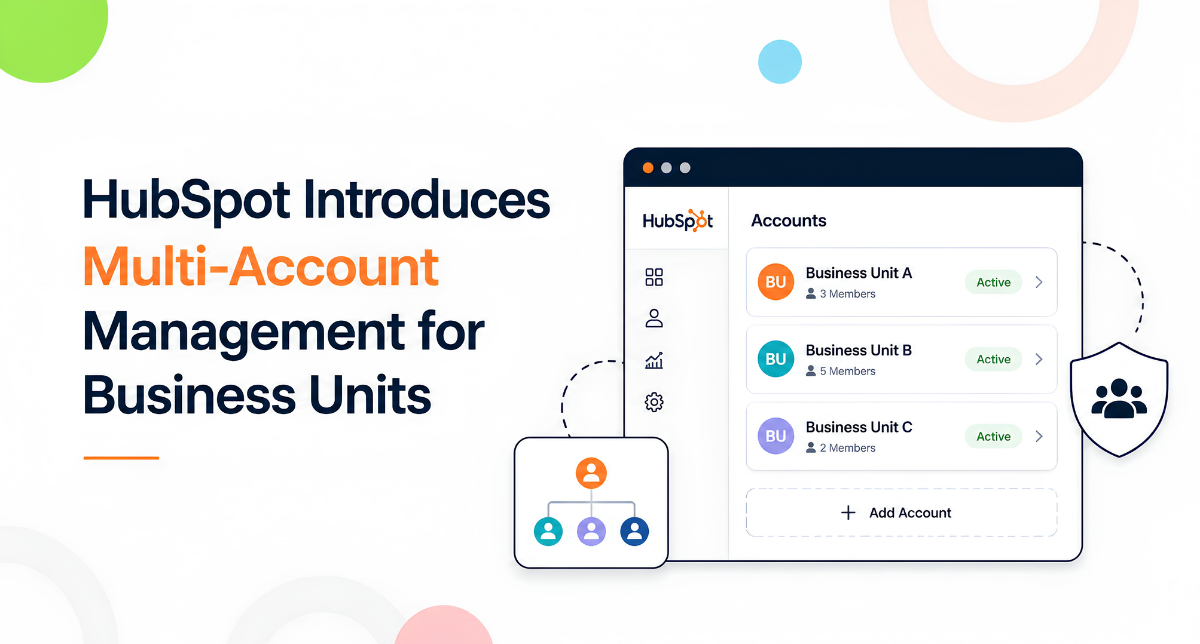
HubSpot Introduces Multi Account Management for Business Units
Managing multiple brands, regions, or business units in HubSpot just got easier. As businesses grow, so does the complexity of managing marketing, sales, customer service, and reporting across multiple brands, regions, subsidiaries, or departments.
Many organizations struggle with maintaining separate HubSpot accounts while trying to keep customer data, reporting, and team collaboration aligned.
Switching between portals, managing duplicate contacts, and maintaining consistent processes can quickly become overwhelming.
To solve these challenges, HubSpot introduces Multi Account Management for Business Units, a powerful capability designed to help organizations manage multiple business entities more efficiently while maintaining visibility and control across their HubSpot ecosystem.
For enterprises, franchises, global organizations, and multi brand businesses, this update marks a significant step forward in CRM and operational management.
What Is Multi Account Management for Business Units?
Multi Account Management: enables organizations to connect and manage multiple HubSpot accounts more effectively across different business units, brands, regions, or subsidiaries.
Many companies operate separate HubSpot portals to support unique business requirements, marketing strategies, customer databases, and reporting structures. While this approach offers flexibility, it often creates operational silos and administrative challenges.
HubSpot’s Multi Account Management feature helps businesses streamline account oversight while maintaining the independence of each business unit.
This allows organizations to scale more effectively without sacrificing governance, visibility, or operational efficiency.
Why Businesses Need Multi Account Management
- Fragmented Customer Data: Customer information may exist across multiple portals, making it difficult to gain a complete understanding of customer relationships.
- Administrative Complexity: Managing permissions, teams, assets, and settings across separate accounts can become time consuming.
- Inconsistent Processes: Different business units may adopt varying standards for sales, marketing, and customer service activities.
- Reporting Challenges: Leadership teams often struggle to consolidate insights across multiple HubSpot environments.
- Brand Management Issues: Organizations with multiple brands need flexibility while ensuring compliance with corporate standards.
Multi Account Management helps address these challenges by providing a more structured approach to account administration and oversight.
Key Features of HubSpot Multi Account Management
- Centralized Account Visibility: Organizations gain greater visibility into connected HubSpot environments while maintaining separate operational structures for business units.
- Simplified Administration: Administrative tasks become more efficient across multiple accounts.
- Enhanced Governance: Standardized processes and governance frameworks can be applied across teams and regions.
- Improved Collaboration: Teams across business units can collaborate while maintaining data separation.
- Better Scalability: New business units can be added more easily as organizations grow.
Benefits for Multi Brand Organizations
- Maintain separate brand identities
- Manage independent marketing campaigns
- Preserve unique customer experiences
- Support specialized sales teams
- Centralize administrative oversight
Benefits for Global Businesses
- Language requirements
- Regional compliance regulations
- Localized marketing strategies
- Market specific customer journeys
- Regional sales operations
Benefits for Franchise and Enterprise Organizations
- Standardize CRM practices
- Improve reporting consistency
- Simplify onboarding processes
- Support local operational independence
- Reduce administrative overhead
How Multi Account Management Supports Growth
- Accelerate onboarding of new business units
- Improve data governance across the organization
- Reduce operational silos between teams
- Support better strategic decision making
Best Practices for Managing Multiple HubSpot Accounts
- Define governance standards for CRM usage and reporting
- Create clear user permissions across accounts
- Standardize sales, marketing, and service processes
- Maintain high data quality across all business units
- Align reporting structures for consistent insights
Common Use Cases for Multi Account Management
- Multi brand companies
- Holding companies
- Franchise networks
- International enterprises
- Mergers and acquisitions
The Future of Enterprise CRM Management
CRM platforms are evolving to support more complex organizational structures.
HubSpot’s Multi Account Management reflects the need for scalability, governance, and operational flexibility in modern enterprises.
Organizations can now balance centralized control with local independence within a connected CRM ecosystem.
Final Thoughts
HubSpot’s Multi Account Management for Business Units helps organizations streamline operations across multiple brands, regions, and subsidiaries.
It improves governance, collaboration, scalability, and visibility while reducing operational complexity.
For businesses operating multiple HubSpot accounts or planning expansion, this feature provides strong long term value.
Scale Your HubSpot Ecosystem with Amwhiz
Managing multiple HubSpot accounts requires expertise in governance, automation, and CRM architecture.
Amwhiz helps businesses with HubSpot implementation, onboarding, CRM customization, sales automation, marketing automation, reporting setup, and enterprise HubSpot consulting.
We help organizations build scalable HubSpot ecosystems across multiple business units, brands, and regions.
Contact Amwhiz today to optimize your HubSpot Multi Account Management strategy.