-1.png?width=134&height=66&name=amwhiz-logo%20(1)-1.png)


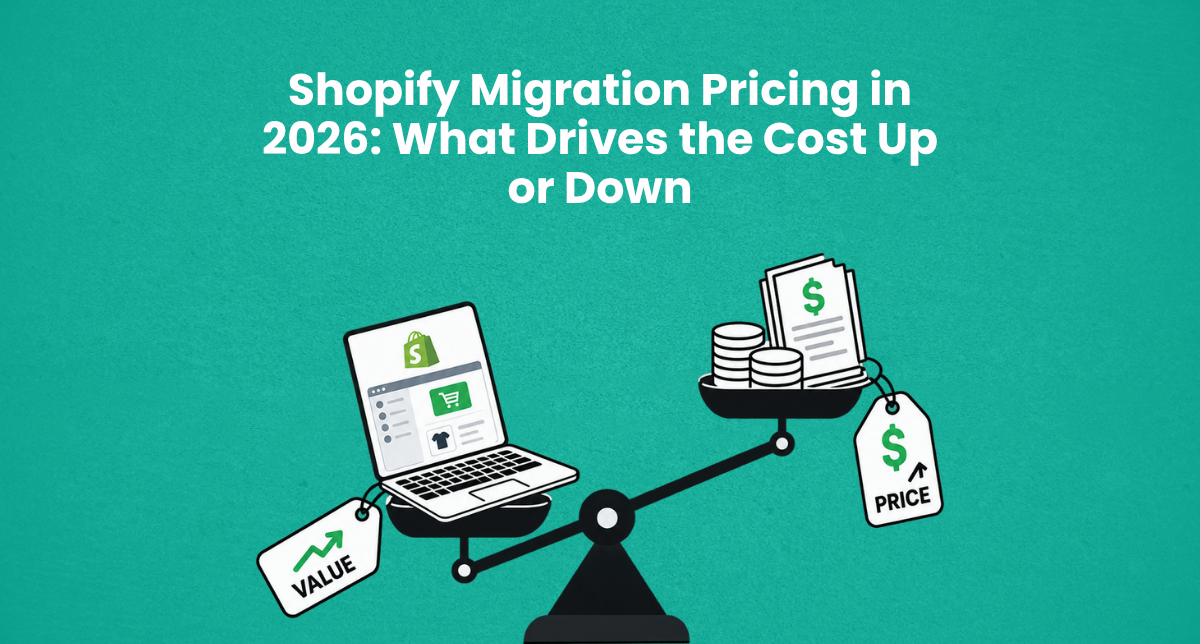
Shopify migration pricing in 2026 typically ranges from $2,500 for a small catalog with a simple theme to $30,000+ for a large, multi-integration store with custom app work and heavy SEO history to protect. Amwhiz scopes these projects through its Shopify store migration services, and the price spread almost always comes down to five factors: catalog size, theme complexity, number of integrations, data history, and how much SEO protection the migration requires. Here's what actually moves the number.
What Drives Shopify Migration Pricing Up or Down in 2026?
The Short Answer
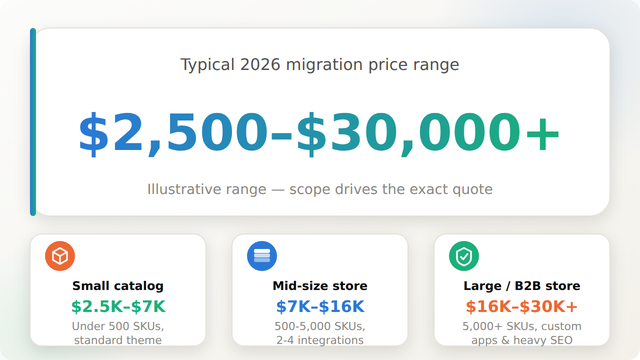
Shopify migration pricing in 2026 typically runs $2,500-$30,000+, driven mainly by catalog size (SKU count), theme/design complexity, the number of apps and integrations that need to be reconnected or rebuilt, how much historical order/customer data needs to migrate, and how many URLs need SEO redirect mapping. A small store with a standard theme and no custom integrations sits at the low end; a large B2B or multi-integration store sits at the high end.
Illustrative 2026 Pricing by Store Size
The Five Factors That Move the Price
Within these brackets, five variables account for most of the movement:
- Catalog size, SKU count and variant complexity drive how long data mapping and QA take.
- Theme and design complexity, a near-stock theme migrates faster than a heavily customized storefront with custom sections and animations.
- Number of integrations, each app or system (ERP, CRM, shipping, loyalty) that needs reconnecting or rebuilding adds scope; see Amwhiz's custom app integration services when a source-platform integration has no Shopify equivalent.
- Data volume and history, years of order history and large customer databases take longer to map and validate than a newer store's dataset.
- SEO protection scope, a store with thousands of indexed URLs needs more redirect-mapping work than a small site with a simple structure.
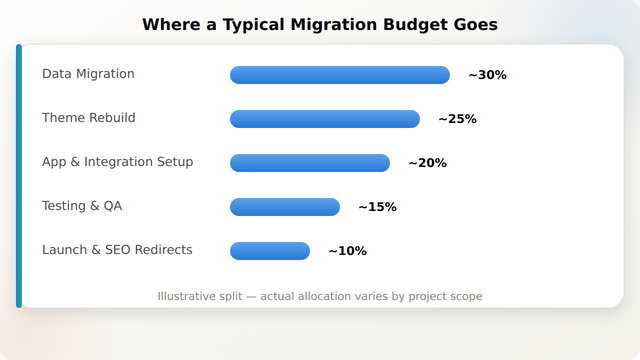
Where the Cost Actually Goes
Platform-Specific Cost Notes
Migration cost also varies by source platform. Migrating from a simpler platform with clean export tools tends to sit at the lower end of a bracket; migrating from a highly customized setup adds work. Amwhiz's guides on BigCommerce to Shopify migration and Magento to Shopify migration break down what's different about each source platform's cost profile.
How to Get an Accurate Quote
A reliable Shopify migration quote requires a few concrete numbers upfront: current SKU count, number of active apps/integrations, approximate order history volume, and roughly how many indexed URLs need redirect mapping. Vendors who quote a fixed number without asking for these are either padding the estimate heavily or planning to bill overages later, a proper scoping call should walk through each of the five cost drivers above.
How Amwhiz Helps
Amwhiz's Shopify store migration services start with a scoping call that prices against your actual catalog size, integration count, and SEO footprint rather than a generic flat rate. The WooCommerce to Shopify migration case study shows a real project's scope and outcome.
Frequently Asked Questions About Shopify Migration Pricing
How much does a Shopify migration cost in 2026?
Typical pricing ranges from $2,500 for a small catalog (under 500 SKUs) with a standard theme to $30,000+ for a large or B2B store with 5,000+ SKUs, custom apps, and heavy SEO history to protect.
What's the single biggest factor in migration price?
Catalog size and complexity usually has the biggest impact, since it drives how long data mapping and QA take. Number of integrations is a close second, since each system reconnection adds scoped work.
Does migrating from a specific platform (Magento, BigCommerce, WooCommerce) change the price?
Yes. Platforms with clean, well-documented export tools tend to migrate faster and cheaper than platforms with heavy customization or messy historical data, even at similar catalog sizes.
Are Shopify subscription fees included in migration pricing?
No. Migration pricing covers the project work, data mapping, theme rebuild, integrations, testing, launch. Shopify's own monthly subscription and any app subscription fees are separate, ongoing costs.
Why do some migration quotes vary so widely for a similar-sized store?
Wide variance usually comes down to what's included: whether SEO redirect mapping is scoped in detail, whether custom integrations are part of the quote, and whether a staged test migration is included or treated as an add-on.
How can I get an accurate quote instead of a rough estimate?
Provide your current SKU count, number of active apps/integrations, approximate order history volume, and an estimate of indexed URLs needing redirects. A vendor should price against these specifics rather than quoting a flat number sight unseen.
Conclusion
Shopify migration pricing in 2026 spans a wide range because store complexity spans a wide range, but the five factors driving it (catalog size, theme complexity, integrations, data volume, SEO scope) are all things you can quantify before you get a quote. Walking into a scoping call with those numbers ready is the fastest way to a price you can trust.
Amwhiz scopes and prices Shopify migrations against your actual store data, not a generic flat rate, and manages the full migration once scope is agreed. Visit amwhiz.com or email sales@amwhiz.com to get started.