-1.png?width=134&height=66&name=amwhiz-logo%20(1)-1.png)




The CRM Isn't the Problem. The Rollout Is. Here's a pattern we see again and again. A business...
The CRM Isn't the Problem. The Rollout Is.
Here's a pattern we see again and again. A business invests in HubSpot, expects a transformation, and six months later the sales team is still living in spreadsheets, the reports don't add up, and someone quietly asks whether they picked the wrong CRM.
They didn't. HubSpot works fine. What failed was the implementation around it. And the reasons implementations fail are remarkably predictable, which is good news, because predictable problems are preventable ones.
Here are the real reasons businesses fail at HubSpot implementation, and how to avoid each, from Amwhiz, a HubSpot partner.
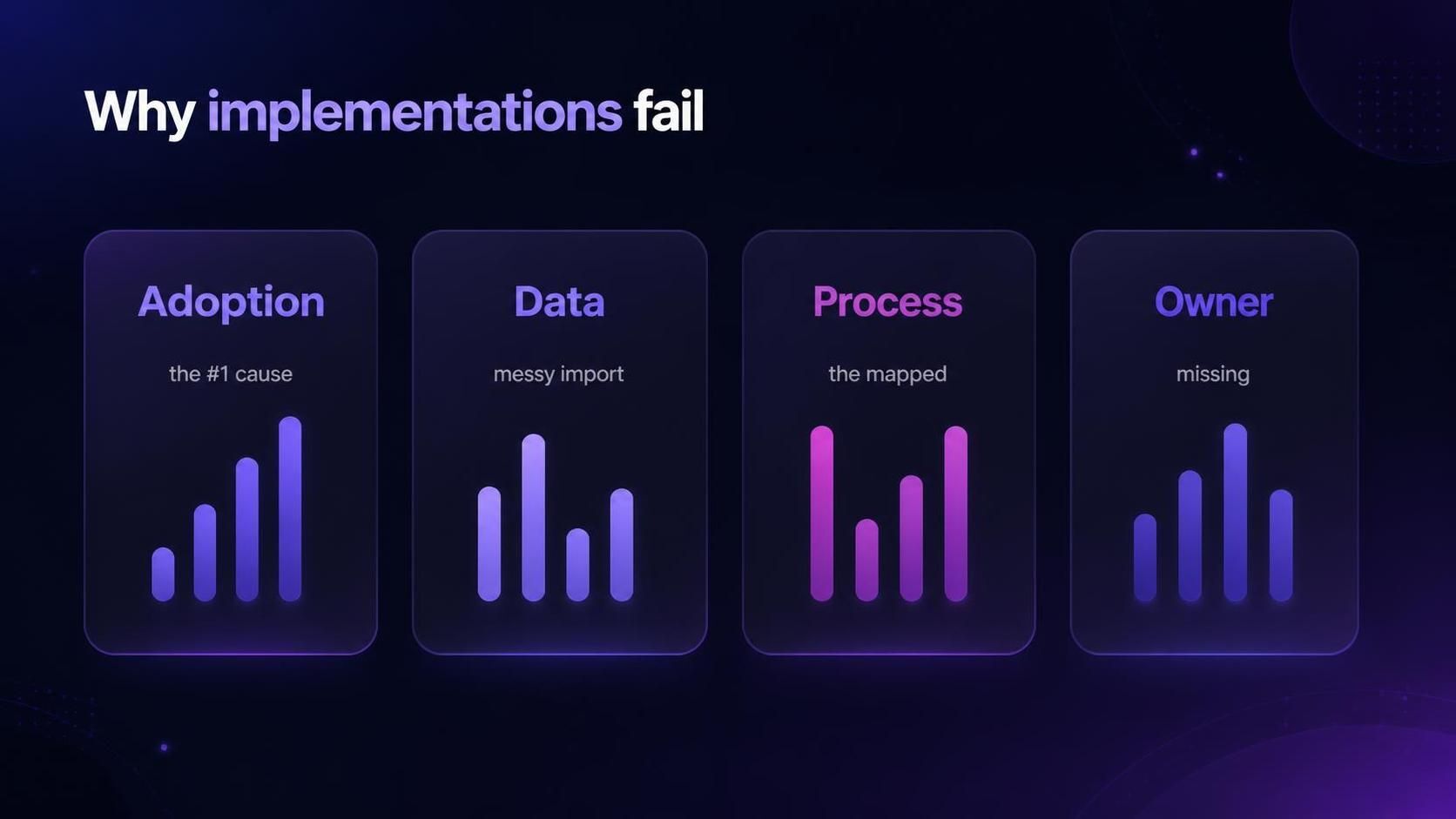
Almost every failure is about people and process, not the software.
Reason One: No Clear Process First
The biggest failure is configuring HubSpot before deciding how you actually sell. Teams jump into building pipelines and properties without mapping their process, and end up with a CRM that fights how people work.
The fix is simple but often skipped: map your sales process first, then build HubSpot to match it. The tool should mirror how you sell, not force you into how someone else thinks you should.
Reason Two: Messy Data Import
Dump years of duplicated, half-filled records into HubSpot and you've poisoned it on day one. Salespeople see bad data, lose trust, and drift back to their own spreadsheets. Once that trust is gone, it's very hard to win back.
The fix is to treat data migration as a cleanup, not a copy. Merge duplicates, fill the gaps, standardise the mess, and only then import. Clean data is the foundation adoption is built on.
Reason Three: Over-Complication
Ironically, doing too much also kills implementations. Dozens of required fields, complex automations nobody understands, and a system so elaborate that using it feels like a chore. People avoid what overwhelms them.
The fix is to start lean. Build the simplest version that delivers value, get the team using it, then add complexity only when they're ready. A CRM people actually use beats a sophisticated one they avoid.
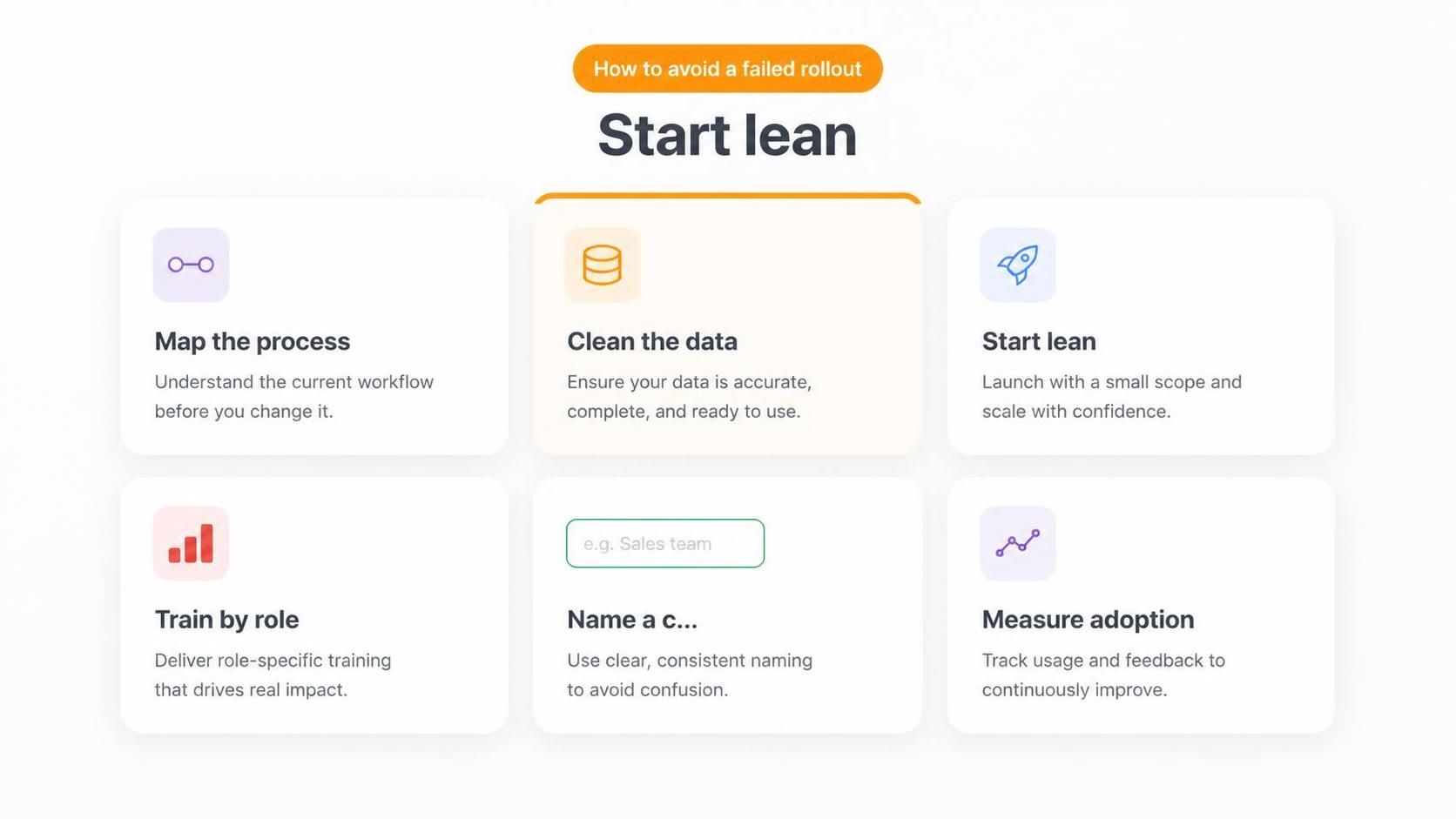
Map the process, clean the data, start lean, train by role, name an owner, measure adoption.
Reason Four: No Adoption Plan
Many implementations treat training as an afterthought, a quick demo at the end, then everyone's expected to just use it. That's not an adoption plan; that's hope.
The fix is to design for adoption from the start: role-specific training, a system genuinely easier than the old way, and support through the first weeks. Adoption is engineered, not assumed.
Reason Five: No Owner and No Leadership Buy-In
Two quiet killers finish the job. First, nobody inside the business owns the CRM after go-live, so it drifts and decays. Second, and bigger, leadership doesn't use it. When managers still ask for updates by email and spreadsheet, the team learns the CRM doesn't really matter.
The fix is to name an internal owner and get leadership visibly using HubSpot. When leaders run their meetings from HubSpot reports, adoption follows. When they ignore it, so does everyone else.
How to Rescue a Stalled Implementation
If your HubSpot has already gone quiet, the good news is that most stalled implementations can be recovered without switching platforms. The pattern is consistent: audit how it's actually being used, find where adoption broke down, clean the data that has decayed, simplify the configuration that overwhelmed people, and retrain the team on a leaner, more useful setup.
What recovery needs is an honest diagnosis rather than more features. Teams often ask for new customisations to fix an adoption problem, when the real cure is fewer required fields and better training. Because it's usually faster and cheaper than starting again, a rescue is almost always worth trying before you write HubSpot off.
How Amwhiz Prevents These Failures
Amwhiz is a HubSpot partner, and our implementations are designed around avoiding exactly these traps. We map your process before touching configuration, clean your data before migrating it, keep the first version lean, train your team by role, help you name an internal owner, and measure adoption so problems surface early.
If your HubSpot has already stalled, we also run recovery projects: audit what went wrong, fix the data and configuration, simplify what overwhelmed people, and rebuild adoption. It's usually faster and cheaper than starting over.
Frequently Asked Questions
Why do most HubSpot implementations fail?
Because of people and process, not the software: no clear process, messy data, over-complication, no adoption plan, and no owner or leadership buy-in. All are preventable.
Can a failed HubSpot implementation be fixed?
Usually yes. A partner can audit what went wrong, clean the data, simplify the setup, and rebuild adoption. Recovery is often faster than switching platforms.
What's the single biggest cause of failure?
Poor adoption. If the team doesn't use HubSpot, everything else is wasted. Adoption has to be designed in from the start.
How important is leadership buy-in?
Critical. If leaders don't use the CRM and expect it, the team won't either. Visible leadership use is one of the strongest drivers of adoption.
How do I measure whether it's working?
Track logins, records updated, deals moved, and reports used. These show whether adoption is landing and where to intervene early.
The Short Version
Businesses fail at HubSpot implementation because of process, data, complexity, adoption, and ownership, never the software itself. Map your process, clean your data, start lean, train by role, name an owner, and get leadership using it. Fix the rollout, not the tool.
Book a free HubSpot health check.
Amwhiz will review your rollout risks, or rescue a stalled one. Visit amwhiz.com or email sales@amwhiz.com.