-1.png?width=134&height=66&name=amwhiz-logo%20(1)-1.png)


Explanation of HubSpot Forms vs Non-HubSpot Forms
written by: Renuka M
HubSpot Forms updates,
HubSpot Conditional Logic,
HubSpot Workflow Updates,
Marketing Automation HubSpot,
CRM Lead Qualification Tools,
HubSpot Forms Automation
What If Your Forms and Workflows Could Adapt to Every Customer Automatically?
Modern customers expect personalized experiences from the very first interaction. Yet many businesses still rely on static forms and generic automation workflows that treat every lead, prospect, and customer the same way.
The result? Irrelevant questions, lower form completion rates, missed opportunities, and inefficient customer journeys.
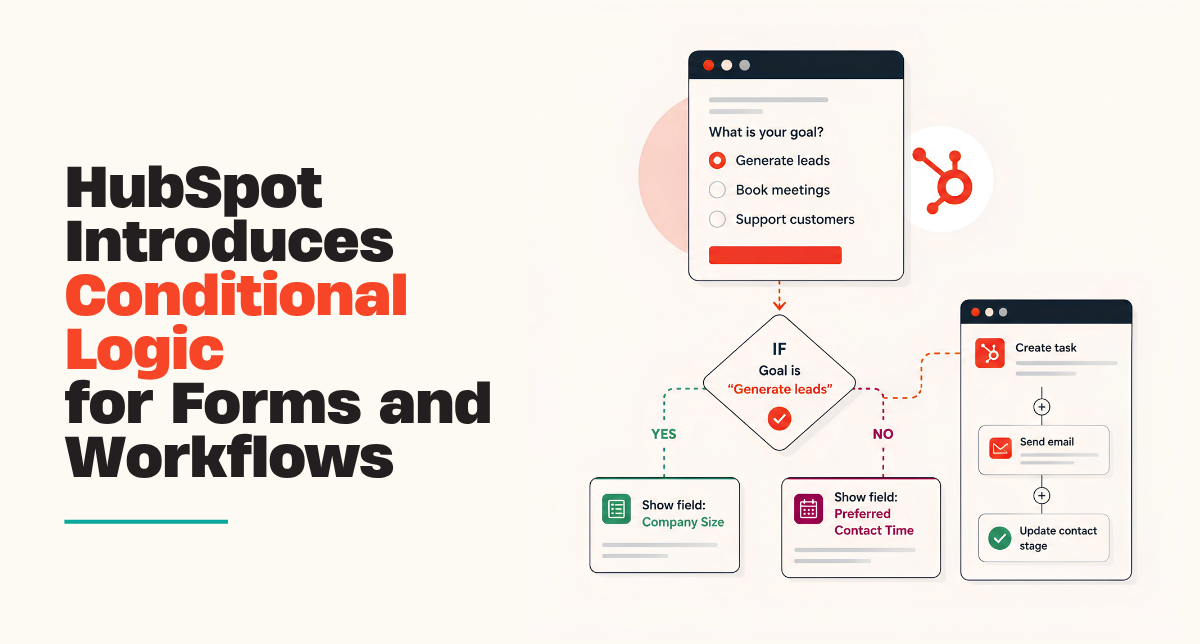
To help businesses create smarter and more dynamic experiences, HubSpot has introduced Conditional Logic for Forms and Workflows. This powerful enhancement allows organizations to personalize data collection, automate decision making, and create highly targeted customer journeys based on user behavior and responses.
For marketing, sales, and customer success teams, this update represents a major step toward delivering more relevant and efficient customer experiences at scale.
What Is Conditional Logic in HubSpot?
Conditional Logic allows forms and workflows to dynamically change based on specific criteria, customer actions, or property values.
Instead of displaying the same questions or triggering the same automation for every user, businesses can create adaptive experiences that respond intelligently to customer information.
With Conditional Logic, HubSpot can automatically determine:
- Which form fields to display
- Which workflow paths contacts should follow
- Which actions should be triggered
- Which communications should be sent
- Which teams should be notified
- Which records should be updated
This creates more personalized and efficient customer interactions throughout the entire lifecycle.
Why Conditional Logic Matters
Every customer is different.
A small business owner has different needs than an enterprise buyer. A new lead requires different communication than an existing customer. Someone interested in one service may need completely different information than someone interested in another.
Without Conditional Logic, businesses often face challenges such as:
- Long and overwhelming forms
- Irrelevant customer questions
- Generic automation sequences
- Lower conversion rates
- Poor lead qualification
- Increased manual work
Conditional Logic solves these problems by ensuring customers only see relevant content and automation paths.
Conditional Logic for HubSpot Forms
Show Relevant Questions Only
Instead of presenting every possible field, forms can display questions based on previous answers.
For example:
If a visitor selects Business Type: Ecommerce, the form can display:
- Monthly order volume
- Ecommerce platform
- Average order value
If a visitor selects Business Type: SaaS, the form can display:
- Number of users
- Subscription model
- Annual recurring revenue
This creates a more personalized experience while reducing form complexity.
Increase Form Completion Rates
Long forms often discourage users from submitting information.
Conditional Logic helps reduce friction by showing only relevant fields, making forms shorter and easier to complete.
Improve Data Quality
By asking targeted questions, businesses collect more meaningful information that supports sales, marketing, and customer success efforts.
Better Lead Qualification
Forms can gather detailed qualification data without overwhelming prospects.
This helps sales teams prioritize high value opportunities more effectively.
Conditional Logic for HubSpot Workflows
Intelligent Customer Journeys
Contacts can be automatically routed through different workflow paths based on:
- Industry
- Company size
- Product interest
- Lifecycle stage
- Customer behavior
- Engagement activity
This ensures customers receive relevant communications and experiences.
Automated Lead Assignment
Workflows can automatically assign leads to the appropriate sales representatives based on predefined criteria.
Examples include:
- Geographic region
- Industry specialization
- Product interest
- Account size
Personalized Nurturing Campaigns
Instead of one generic nurture sequence, businesses can create multiple tailored paths for different audiences.
This improves engagement and increases conversion opportunities.
Customer Success Automation
Existing customers can receive onboarding, training, support, and renewal communications based on their activity and needs.
Real World Examples of Conditional Logic
Ecommerce Lead Qualification
A Shopify merchant and a WooCommerce merchant may require different services and recommendations.
Conditional Logic can collect platform specific information and trigger tailored workflows automatically.
B2B Service Inquiries
Enterprise prospects often require different sales processes than small business customers.
Forms and workflows can adapt accordingly.
Customer Onboarding
New customers can receive onboarding journeys based on purchased products, service plans, or implementation requirements.
Event Registration
Attendees can receive personalized follow ups based on session interests, attendance status, and engagement levels.
Benefits for Marketing Teams
- Improved Conversion Rates: Relevant forms increase engagement and submissions.
- Better Segmentation: Richer data improves targeting and audience building.
- More Effective Campaigns: Right message at the right time improves performance.
- Reduced Manual Processes: Automation replaces repetitive decision making.
Benefits for Sales Teams
- Higher Quality Leads: Better qualification improves pipeline quality.
- Faster Response Times: Leads are routed automatically to correct teams.
- Improved Productivity: Less time spent on unqualified leads.
Benefits for Customer Success Teams
- Personalized Onboarding: Tailored customer journeys improve adoption.
- Proactive Engagement: Milestone-based automation improves experience.
- Better Retention: Relevant communication increases customer lifetime value.
Best Practices for Using Conditional Logic
- Keep User Experience Simple: Avoid unnecessary complexity.
- Focus on Relevant Data: Collect only useful information.
- Map Customer Journeys: Define paths before building workflows.
- Test Automation Paths: Ensure logic works correctly.
- Monitor Performance: Track conversions, engagement, and revenue impact.
The Future of Personalized Automation
Customers increasingly expect businesses to understand their needs and deliver relevant experiences immediately.
Conditional Logic represents a major advancement in marketing automation because it enables adaptive customer journeys instead of static workflows.
As automation platforms evolve, personalization will become a key driver of conversion rates, customer satisfaction, and long term loyalty.
Final Thoughts
HubSpot's new Conditional Logic for Forms and Workflows empowers businesses to create smarter, more personalized customer experiences from the first interaction through the entire lifecycle.
By dynamically adapting forms and automating decisions, organizations can improve lead quality, increase conversions, and streamline operations.
For businesses focused on growth, this feature provides a powerful opportunity to elevate marketing, sales, and customer success strategies.
Build Smarter HubSpot Automation with Amwhiz
Successfully implementing Conditional Logic requires thoughtful planning, workflow design, CRM expertise, and automation strategy.
Amwhiz helps businesses maximize HubSpot through expert HubSpot implementation, HubSpot onboarding, workflow automation, CRM customization, lead management, customer journey mapping, marketing automation, sales automation, and ecommerce integrations.
Our team designs intelligent HubSpot solutions that improve customer experiences, automate operations, and drive measurable business growth.
Contact Amwhiz today to create personalized HubSpot experiences that convert more leads and accelerate business success.