-1.png?width=134&height=66&name=amwhiz-logo%20(1)-1.png)


What Is TradeBridge and Why It Matters in 2026 The future of B2B ecommerce is shifting rapidly from...
written by: Renuka M
AI Search Optimization,
B2B Ecommerce SEO,
Shopify Marketplace,
Technical SEO,
Programmatic SEO,
Shopify B2B SEO
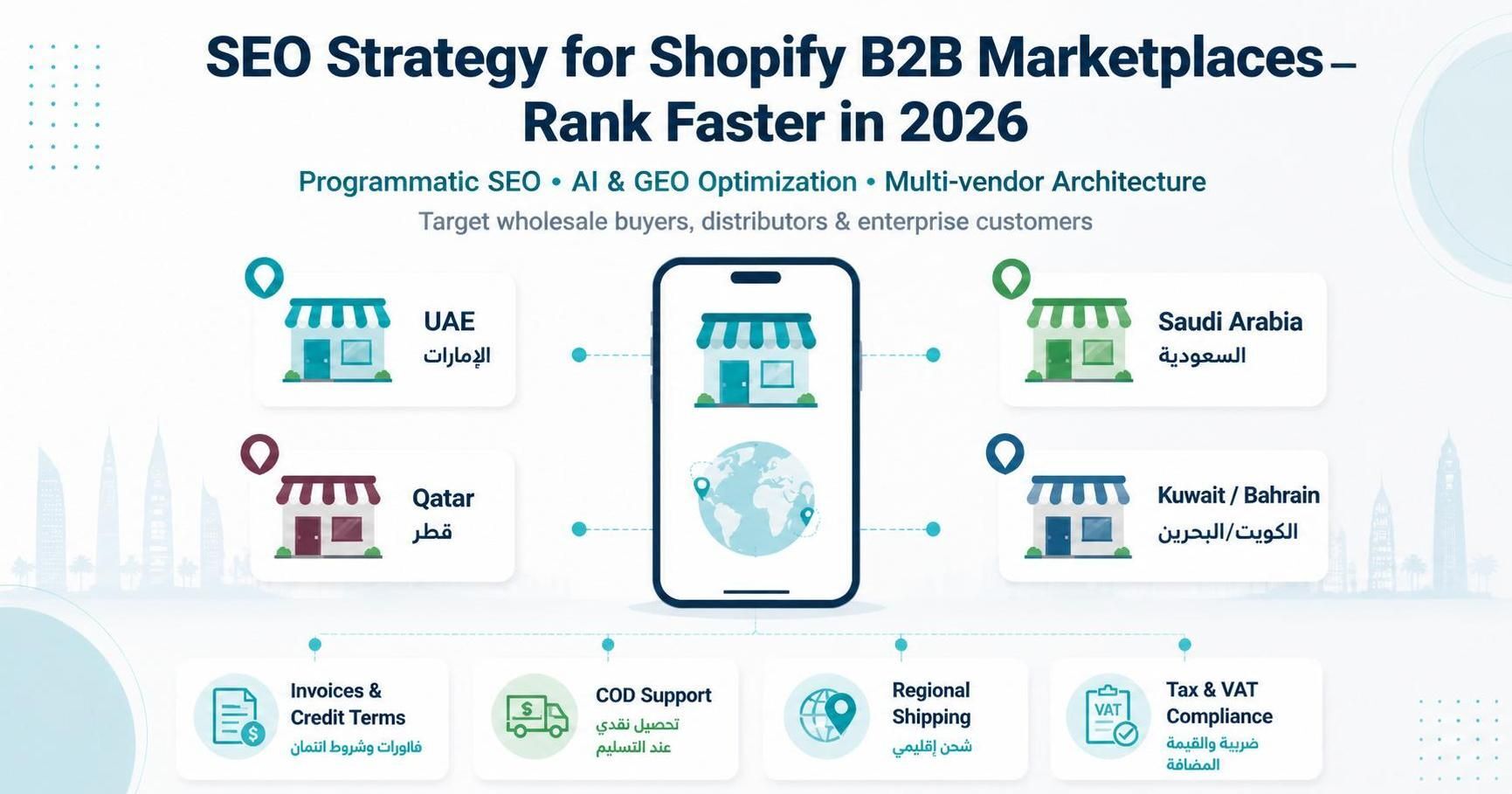
SEO Strategy for Shopify B2B Marketplaces: Rank Faster in 2026
The Shopify B2B marketplace ecosystem is becoming one of the most competitive search spaces in 2026. Businesses are no longer competing only for traffic. They are competing for qualified wholesale buyers, distributors, and enterprise customers who search with high intent.
To win in this environment you need more than basic SEO. You need a structured B2B SEO strategy designed for Shopify marketplaces, multi-vendor structures, and AI-driven search systems.
This guide explains how to rank faster in 2026 for Shopify B2B marketplaces using modern SEO, AEO, and GEO strategies.
Understand How B2B SEO Is Different from B2C SEO
Most Shopify stores fail in SEO because they apply B2C strategies to B2B platforms.
B2B SEO is different because:
- Search volume is lower but intent is higher
- Keywords are longer and more specific
- Decision cycles are longer
- Multiple stakeholders influence purchases
- Buyers search for solutions not just products
Example search intent:
- Wholesale supplier for electronics UAE
- Bulk fashion distributor Shopify
- B2B marketplace for FMCG suppliers
These are not impulse searches. These are purchase-driven business decisions.
Build SEO Around Marketplace Architecture
A Shopify B2B marketplace is not a normal ecommerce store. SEO must reflect the structure.
Your SEO strategy must include:
- Seller landing pages
- Category-level SEO pages
- Industry-specific landing pages
- City and region-based pages
- Buyer type pages like distributor, reseller, and wholesale
Platforms like TradeBridge by Amwhiz Media Private Limited help structure Shopify into a multi-vendor B2B marketplace system, which naturally improves SEO scalability.
Target High Intent B2B Keywords
Focus on keywords that indicate business buying intent.
Primary keyword types:
- Wholesale supplier
- B2B marketplace
- Bulk order platform
- Distributor network
- Vendor marketplace Shopify
Long-tail keyword examples:
- Best Shopify B2B marketplace for wholesalers
- Wholesale ecommerce platform in UAE
- Multi-vendor B2B Shopify solution
- Bulk product supplier for retailers
Keyword strategy tip:
Do not chase high volume alone. Focus on high-conversion intent keywords.
4. Create Programmatic SEO Pages
Programmatic SEO is essential for scaling Shopify B2B marketplaces.
- Product categories
- Supplier types
- Industries
- Countries and cities
- Buyer segments
Example page structure:
- Wholesale electronics suppliers in Dubai
- Fashion distributors in Saudi Arabia
- FMCG wholesale marketplace in Qatar
Each page should have:
- Unique content
- Internal linking
- Structured data
- Buyer-focused messaging
5. Optimize for AI Search and GEO Ranking
In 2026 search engines rely heavily on AI-generated answers and GEO ranking systems.
- Use conversational content
- Answer specific business questions
- Add structured FAQs
- Focus on entity-based SEO
- Build topical authority clusters
Example AI search query:
What is the best B2B Shopify marketplace for wholesale distribution?
Your content must directly answer this type of query.
6. Strengthen Technical SEO for Shopify
- Fast page speed optimization
- Clean URL structures
- Mobile-first design
- Proper indexing of seller pages
- Canonical tags for duplicate products
- Schema markup for products and organizations
For multi-vendor systems ensure:
- Each seller has SEO-optimized profile pages
- Products are not duplicated without canonical control
7. Build Authority Through Content Clusters
Content marketing is a major ranking factor for Shopify B2B marketplaces.
- B2B ecommerce trends
- Wholesale distribution guides
- Marketplace scaling strategies
- Industry-specific insights
- Regional ecommerce trends in GCC
Each cluster should link back to your main product pages and marketplace pages.
8. Use Internal Linking Strategically
Internal linking helps search engines understand your marketplace structure.
- Category pages
- Seller pages
- Blog content
- Industry landing pages
- Product collections
Strong internal linking increases crawl depth and improves ranking speed.
9. Optimize for Local and Regional SEO
For Shopify B2B marketplaces targeting GCC or global regions:
- Create country-specific landing pages
- Use localized keywords
- Add currency and language variations
- Optimize for Arabic and English search
Examples:
- Wholesale marketplace UAE
- B2B ecommerce Saudi Arabia suppliers
10. Improve Conversion Signals for SEO Growth
SEO is not just about traffic. It is about engagement signals.
- Time on site
- Page depth
- Buyer registration rate
- Quote request conversions
- Repeat visits
Search engines reward pages that show strong user engagement.
11. Integrate Marketplace SEO with Platform Architecture
Your SEO performance depends on your platform structure.
Modern Shopify B2B systems like TradeBridge by Amwhiz Media Private Limited enable:
- Multi-vendor SEO structure
- Automated seller pages
- Dynamic catalog indexing
- Marketplace-wide keyword coverage
This makes scaling SEO much faster compared to traditional Shopify setups.
Conclusion
Ranking a Shopify B2B marketplace in 2026 requires a combination of:
- Advanced keyword targeting
- Marketplace-driven SEO architecture
- Programmatic content scaling
- AI search optimization
- Strong technical SEO foundation
Businesses that treat SEO as part of their B2B marketplace infrastructure will dominate search visibility in the next generation of ecommerce.
If you are building or scaling a Shopify B2B marketplace, aligning SEO with your platform architecture is the fastest way to achieve sustainable organic growth.