-1.png?width=134&height=66&name=amwhiz-logo%20(1)-1.png)


A web app development engagement with Amwhiz includes discovery and scoping, UX and technical design, development in staged sprints, QA testing, deployment, and a defined post-launch support period, not just writing code against a spec. Full details are on the web app development page. This post walks through exactly what happens at each stage and what you should expect to receive along the way.
What Does a Web App Development Engagement Actually Include?
The Short Answer
A complete web app engagement includes a discovery phase that defines requirements and user flows, UX/UI design with reviewable mockups, development delivered in staged sprints with regular check-ins, QA testing across browsers and devices, a deployment phase with a production environment set up, and a post-launch support window to fix issues that only show up with real usage. Engagements that skip discovery or structured QA tend to produce web apps that need significant rework within the first few months.
Stage 1: Discovery and Scoping
Before any design or development work starts, the engagement defines what the web app actually needs to do, for whom, and how success will be measured. This typically includes:
- Requirements gathering, core user flows, must-have features vs. nice-to-haves
- Technical scoping, what it needs to integrate with (CRM, payment processor, existing databases)
- A defined project scope document and timeline before development begins
- Identifying which features ship in an initial release vs. a later phase
Stage 2: UX/UI Design
With scope defined, the design phase produces wireframes and then high-fidelity mockups for review before a single line of production code gets written. This step matters most for internal tools and customer-facing products alike, a design reviewed and approved upfront avoids expensive rebuilds later. It's the same principle behind well-scoped mobile app development work, where design-before-build keeps rework to a minimum.
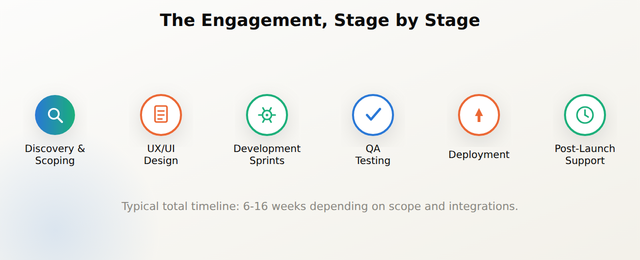
Stage 3: Development in Staged Sprints
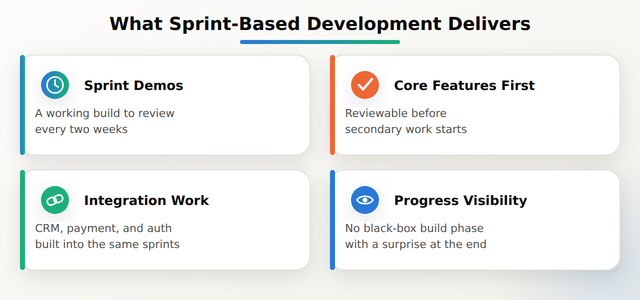
Development typically runs in two-week sprints with working builds delivered regularly, rather than one long build phase with no visibility until the end. This structure lets you review progress, catch scope drift early, and adjust priorities as real functionality takes shape.
- Regular sprint demos or check-ins with a working build, not just status updates
- Core features built and reviewable before secondary features start
- Integration work, CRM, payment, authentication, scoped and built as part of the same sprint structure
Stage 4: QA Testing
Before deployment, the build goes through structured testing across browsers, devices, and edge cases, not just a quick click-through. This is what separates a web app that holds up under real usage from one that looks finished in a demo but breaks on an older browser or an unexpected input.
Stage 5: Deployment
Deployment includes setting up the production environment, DNS and hosting configuration, and a rollout plan, commonly with a staging environment used for final validation before the app goes live to real users.
Stage 6: Post-Launch Support
A defined support window after launch catches the issues that only surface with real user traffic, unexpected data, browser quirks, or load patterns that testing didn't fully anticipate. What happens after that window (ongoing maintenance, feature additions, or a support retainer) should be agreed on before the engagement starts, not negotiated after launch.
How Amwhiz Helps
Amwhiz runs web app development engagements through all six stages above, with sprint-based delivery and structured QA built in as standard, so what launches matches what was scoped and holds up under real usage.
Frequently Asked Questions about Web App Development Engagements
How long does a web app development engagement take?
Most engagements run 6-16 weeks from discovery to deployment, depending on feature scope, design complexity, and how many systems the app needs to integrate with.
What's included in the discovery phase?
Discovery typically includes requirements gathering, defining core user flows, technical scoping for integrations, and a documented project scope and timeline before design or development starts.
Do I get to review designs before development starts?
Yes. A proper engagement produces wireframes and high-fidelity mockups for review and approval before production development begins, to avoid expensive rework later.
What happens if I need changes after the app is built?
Most engagements include a post-launch support window for fixes, and ongoing feature work or maintenance is typically arranged as a separate retainer or project once the app is live and usage data is available.
Can a web app be integrated with our existing CRM or payment system?
Yes, integration with CRM, payment processors, or existing databases is commonly scoped as part of the discovery phase and built alongside the core application.
What does a typical web app development engagement cost?
Cost depends heavily on feature scope, design complexity, and integrations, so pricing varies widely by project; a defined discovery and scoping phase is the most reliable way to get an accurate estimate rather than a flat quote.
Conclusion
A web app development engagement is more than a development sprint against a spec, the discovery, design, QA, and post-launch stages are what determine whether the finished app actually fits how your business and users operate. Knowing what to expect at each stage makes it easier to evaluate a vendor and plan around a realistic timeline.
Amwhiz scopes and delivers web app development engagements through every stage above, from discovery through post-launch support. Visit amwhiz.com or email sales@amwhiz.com to get started.