-1.png?width=134&height=66&name=amwhiz-logo%20(1)-1.png)



For most businesses, a web app should be built first because it reaches every device through a browser, costs less upfront, and validates the product before committing to native mobile development. Amwhiz builds both web apps and mobile apps, and the right answer genuinely depends on your users' behavior and budget, this post breaks down when each makes sense first.
Mobile App vs. Web App: Which Should You Build First?
The Short Answer
Build a web app first if you need to reach the widest audience quickly, keep costs down, and iterate fast, a web app works across desktop and mobile browsers without app store approval. Build a mobile app first if your core use case depends on device features like push notifications, offline access, or camera integration, or if your users primarily engage through an app store and repeat, frequent use. Many businesses eventually need both, but the one that matches your primary user behavior should come first.
What a Web App Gets You First
A web app runs in any browser, on any device, without requiring a download or app store approval. That makes it the faster, cheaper path to getting a real product in front of real users.
- No app store review process, ship updates instantly, any time
- One codebase reaches desktop, tablet, and mobile browsers
- Lower upfront development cost since there's no separate iOS and Android build
- Easier to test and iterate on based on real usage data before committing to more
This is the path most SaaS tools, internal business tools, and dashboards take first, since users access them through a link rather than searching an app store.
What a Mobile App Gets You First
A mobile app makes more sense first when the product depends on capabilities a browser can't reliably deliver, or when your users expect an app-store presence from day one.
- Push notifications that reach users even when they're not actively using the app
- Offline functionality for users with inconsistent connectivity
- Native device features, camera, GPS, biometric login, used as a core part of the product
- App store presence and discoverability for consumer-facing products
Ecommerce brands with high repeat-purchase customers often see this play out directly, see Shopify mobile app vs. responsive website for how that tradeoff looks in a retail context, and the headless mobile commerce case study for what a mobile-first build looks like in practice.
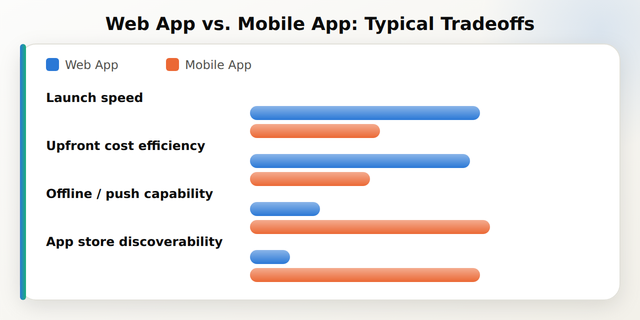
Cost and Timeline: What to Expect for Each
Web apps typically cost less and launch faster because there's one codebase and no app store review cycle. Mobile apps take longer and cost more upfront, largely because of platform-specific development and the review process for each store.
- Web app: commonly 6-12 weeks for a first functional version, one shared codebase
- Native mobile app (iOS and Android): commonly 10-18 weeks, plus app store review time (typically a few days to a couple of weeks per platform)
- Cross-platform mobile frameworks can narrow this gap but still add native-specific testing and store submission work
See ecommerce mobile app development for iOS and Android for how that timeline plays out on a real ecommerce build.
A Simple Decision Framework
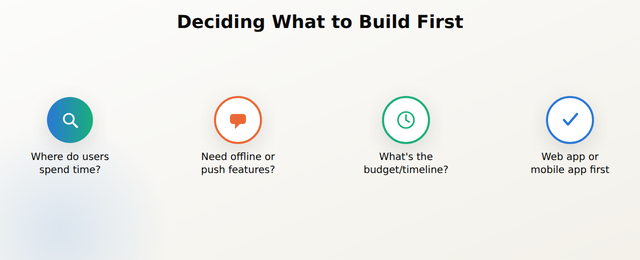
Walking through these questions in order usually surfaces the right starting point:
When You'll Likely Need Both
Most growing products eventually need both a web app and a mobile app, the web app for broad reach, onboarding, and admin functions, and the mobile app for the engaged, repeat-use audience that benefits from push and offline access. The practical move is building the one that matches your primary use case first, proving it out, and adding the second once usage data justifies the investment.
How Amwhiz Helps
Amwhiz builds both web app development and mobile app development engagements, and starts every project with a scoping conversation about your users' actual behavior, so the platform decision is based on evidence rather than a default assumption.
Frequently Asked Questions about Mobile App vs. Web App
Is a web app cheaper than a mobile app to build?
Generally yes, because a web app uses one codebase across devices while a native mobile app typically needs separate iOS and Android development, which adds both cost and timeline.
Can a web app do everything a mobile app can?
Mostly, with exceptions, modern web apps (including progressive web apps) can support offline access and notifications to a degree, but native device features like full offline mode, biometric login, or deep camera integration are still more reliable in a native mobile app.
How long does it take to build a web app vs. a mobile app?
A first functional web app version commonly takes 6-12 weeks. A native mobile app for iOS and Android commonly takes 10-18 weeks, plus app store review time per platform.
Should an ecommerce business build a web app or mobile app first?
Most ecommerce businesses already have a responsive website; the question is usually whether a dedicated mobile app is worth adding, which typically makes sense once repeat purchase behavior and engagement justify push notifications and app store presence.
Do I need to choose one platform permanently?
No. Most businesses build one first to validate the product and add the second later, once usage data shows where the investment pays off.
What determines whether I need a native app instead of a progressive web app?
If your product depends on reliable offline functionality, deep native device integration, or app store discoverability as a core acquisition channel, a native app is usually the safer investment over a progressive web app.
Conclusion
There's no universal right answer between mobile app and web app, the right first build depends on where your users are, what device capabilities the product genuinely needs, and what budget and timeline you're working with. Most businesses get more value starting with a web app and adding mobile once usage justifies it, but products built around device-native features are often better served starting mobile.
Amwhiz helps businesses decide between web app and mobile app development based on real user behavior, then builds whichever comes first properly. Visit amwhiz.com or email sales@amwhiz.com to get started.