-1.png?width=134&height=66&name=amwhiz-logo%20(1)-1.png)


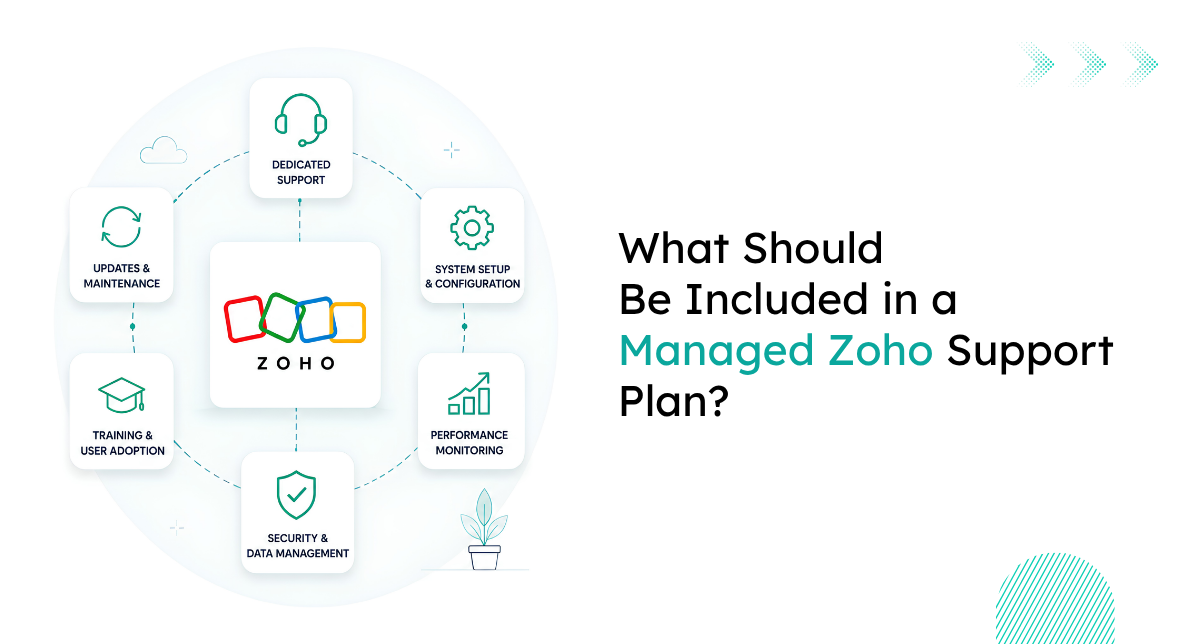

Amwhiz, an authorized Zoho partner, gets this question from almost every sales team: is WhatsApp...
What Actually Happens After Go-Live?
The implementation went well. Everyone's using the system. Then, three months later, a workflow stops firing, a new hire needs setting up, someone wants a report that doesn't exist yet, and the person who understood how it was all built has left. Now what?
This is the moment a lot of businesses discover they never thought about what happens after go-live. A good managed Zoho support plan is the answer, but "support" can mean anything from a panic hotline to a genuine partnership, so it's worth knowing what to actually look for.
Here's what a proper plan should include, and what separates real ongoing support from a glorified help desk. It's how we structure our own plans at Amwhiz.
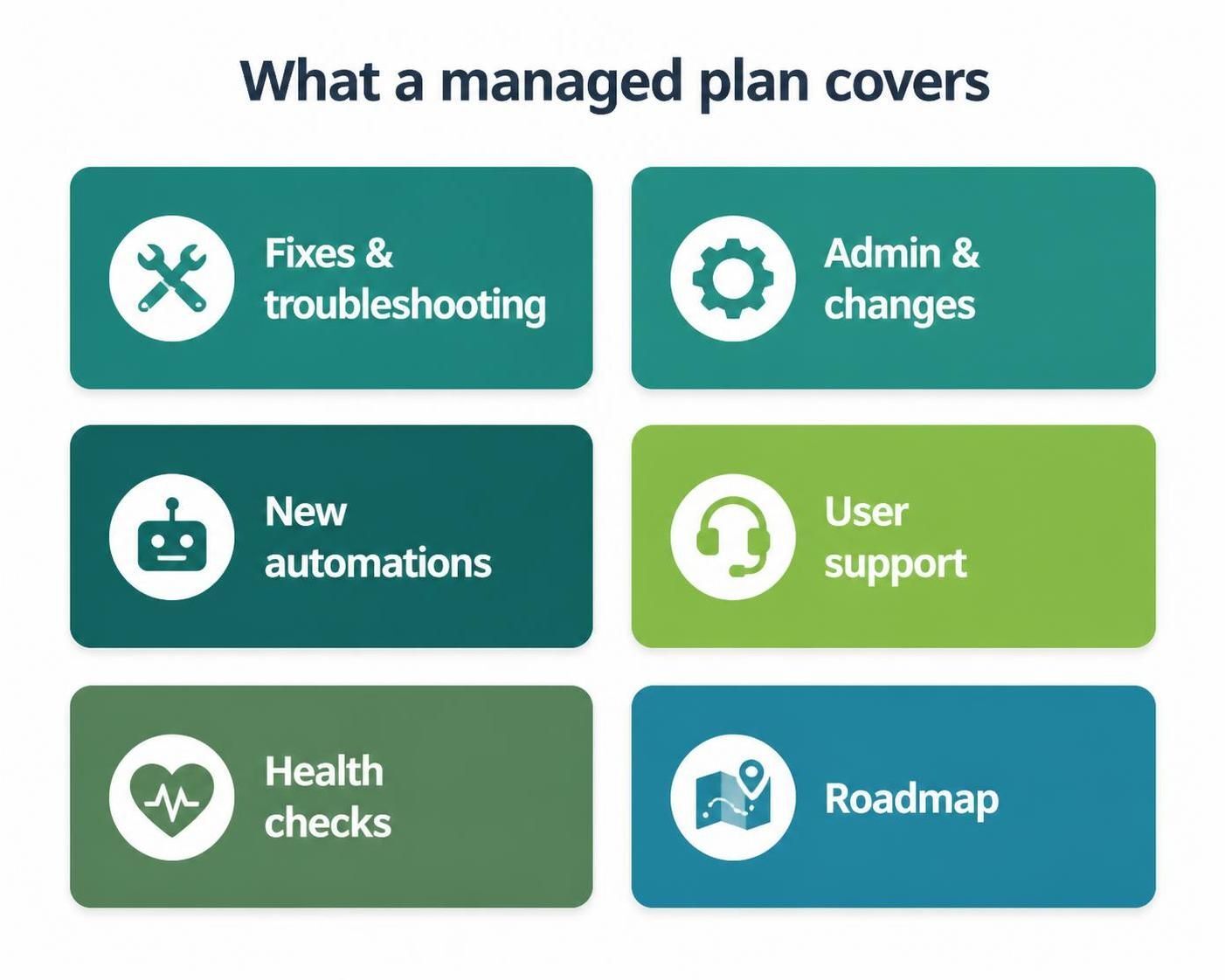
Fixes and admin are the baseline. The real value is the proactive, strategic side.
Beyond "It's Broken, Please Fix It"
The weakest support plans are pure break-fix. Something stops working, you raise a ticket, eventually it gets fixed. Useful, but reactive, and it treats your Zoho setup as a static thing that only needs attention when it fails.
A good plan does that and more. It keeps the system healthy, adapts it as your business changes, and helps you get more out of it over time. The difference is between a plumber you call in a crisis and one who quietly keeps your pipes from bursting in the first place.
What a Real Plan Includes
Here's the shortlist worth insisting on when you compare plans:
- Troubleshooting and fixes, with clear response times so you're not left waiting when something breaks.
- Everyday admin, adding users, adjusting fields, tweaking workflows, so you're not stuck for small changes.
- New automations and reports as your needs evolve, because the business you run next year won't be the one you run today.
- User support and training, so new starters get up to speed and existing staff keep using it well.
- Regular health checks that catch problems and cleanup opportunities before they bite.
- Advice and roadmap, someone who knows your setup helping you plan what to improve next.
Response Times You Can Actually Rely On
When your CRM or finance system is down, "we'll get to it" isn't good enough. A serious plan sets clear response times, so you know that an urgent problem gets urgent attention and a minor request gets handled in reasonable order.
This is the part that turns support from a hopeful email into a dependable service. Ask any provider what their response commitments are, and be wary if the answer is vague.
.jpeg?width=1536&height=1024&name=Duck-ai-image-2026-08-05-05-06%20(1).jpeg)
Proactive, not just break-fix. Responsive, with real SLAs. Strategic, helping you grow.
The Proactive Bit Is Where the Value Hides
Anyone can fix what's broken. The real worth of a managed plan is in the problems that never happen because someone was watching.
Regular health checks catch the data that's decaying, the automation that's quietly misbehaving, the licence tier you've outgrown or are overpaying for. Left alone, these fester until they become a crisis. Caught early, they're a five-minute tidy-up. A proactive plan pays for itself largely by preventing the expensive surprises, which is exactly the value that's invisible until you don't have it.
A Partner Who Knows Your Setup
There's a quiet benefit to a managed plan that's easy to miss: continuity. The provider who supports you already knows how your system was built and why. You're not re-explaining your business to a stranger every time you need help.
That accumulated knowledge means faster fixes, better advice, and changes that fit how everything else works rather than creating new problems. It's the difference between support and a support relationship.
Questions to Ask Before You Sign
Support plans can look similar on paper and behave very differently in practice. A few pointed questions cut through the marketing.
Ask how quickly they respond to an urgent issue, and get it in writing. Ask whether the plan includes making changes and building new things, or only fixing what breaks. Ask who you'll actually deal with, the people who built your system, or a rotating queue of strangers. Ask whether they proactively review your setup, or only act when you raise a ticket. And ask what's explicitly not included, because the gaps are where surprises hide.
The answers tell you whether you're buying a genuine support relationship or a break-fix service with a nicer name. Both have their place, but you should know which one you're paying for before you commit.
Why This Matters More as You Grow
A small, simple Zoho setup can limp along without much support. A growing, connected one can't. The more your business relies on the system, and the more departments and integrations depend on it, the more expensive an unattended problem becomes. A workflow that silently stops firing might cost a startup an afternoon; for a business running everything through Zoho, it can quietly break a core process for days before anyone notices. That rising dependence is exactly why proactive support stops being a nicety and becomes insurance worth having.
How Amwhiz Does Managed Support
Amwhiz is an authorized Zoho partner, and our managed Zoho support plans cover the whole picture: fixes with clear response times, everyday admin, new automations and reports, user training, regular health checks, and roadmap advice from a team that knows your setup inside out.
The point isn't to be on call for emergencies. It's to keep your Zoho system healthy, growing with you, and getting more valuable over time, so it stays an asset rather than slowly becoming a problem nobody owns.
Frequently Asked Questions
What's the difference between support and a managed plan?
Basic support fixes things when they break. A managed plan also keeps the system healthy, makes changes as you grow, and advises on what to improve, so it's proactive rather than purely reactive.
Do I need a support plan after implementation?
Most businesses benefit from one. Systems need admin, new starters need setting up, and needs change. A plan means you're not stranded when the person who built it isn't around.
Should a plan include response times?
Yes. Clear response commitments are what make support dependable. Be cautious of any plan that's vague about how quickly urgent issues get attention.
Can a plan help us improve, not just maintain?
A good one does. Beyond fixes, it should bring new automations, reports and advice, so your Zoho setup keeps getting more valuable rather than standing still.
Why use the partner who built it?
Continuity. A provider who already knows your setup fixes things faster and gives better advice than a stranger learning your business from scratch each time.
The Short Version
A managed Zoho support plan should cover fixes with real response times, everyday admin, new automations and reports, user training, regular health checks, and roadmap advice. The baseline is break-fix; the real value is the proactive, strategic support that keeps your system healthy and growing.
Book a free managed support consultation.
Amwhiz, an authorized Zoho partner, will keep your Zoho setup healthy, current and growing with a plan that fits. Visit amwhiz.com or email sales@amwhiz.com.