-1.png?width=134&height=66&name=amwhiz-logo%20(1)-1.png)



A CRM That Doesn't Talk to Your Other Tools Is Only Half a CRM HubSpot is powerful on its own. But...
A CRM That Doesn't Talk to Your Other Tools Is Only Half a CRM
HubSpot is powerful on its own. But your business doesn't run on HubSpot alone, it runs on a store, an accounting system, messaging apps, ad platforms, and more. When those don't talk to your CRM, someone spends their day copying data between them, and important context gets lost in the gaps.
The right integrations turn HubSpot from an isolated CRM into the hub your whole business flows through. So which ones are actually worth setting up?
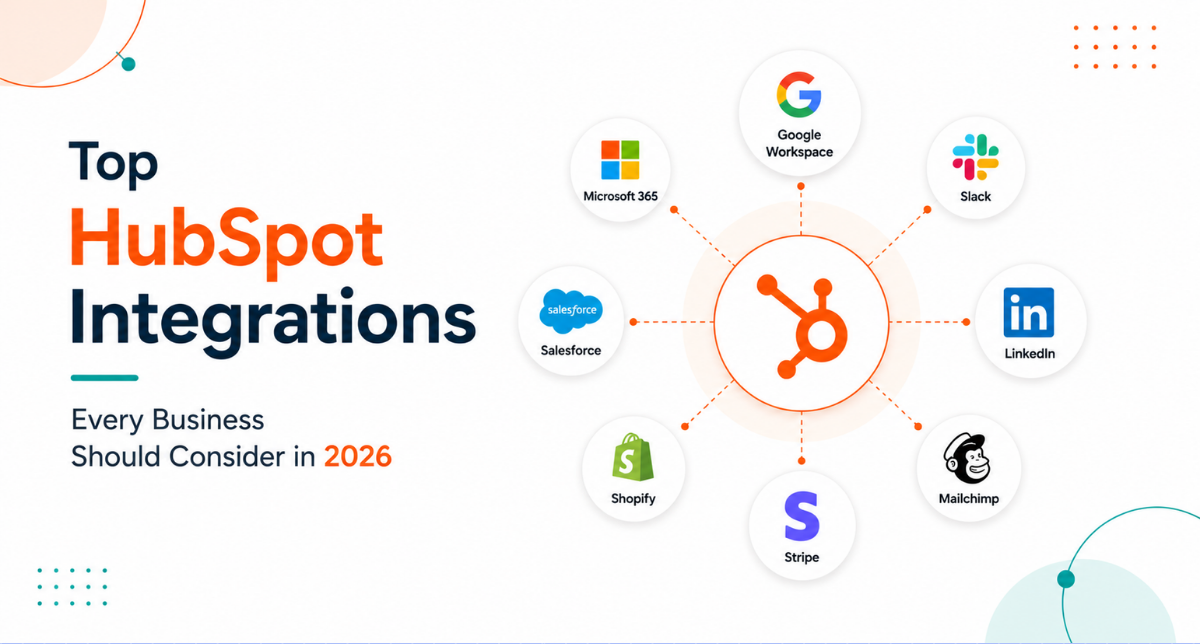
Here are the HubSpot integrations every business should consider in 2026, from Amwhiz, a HubSpot partner.
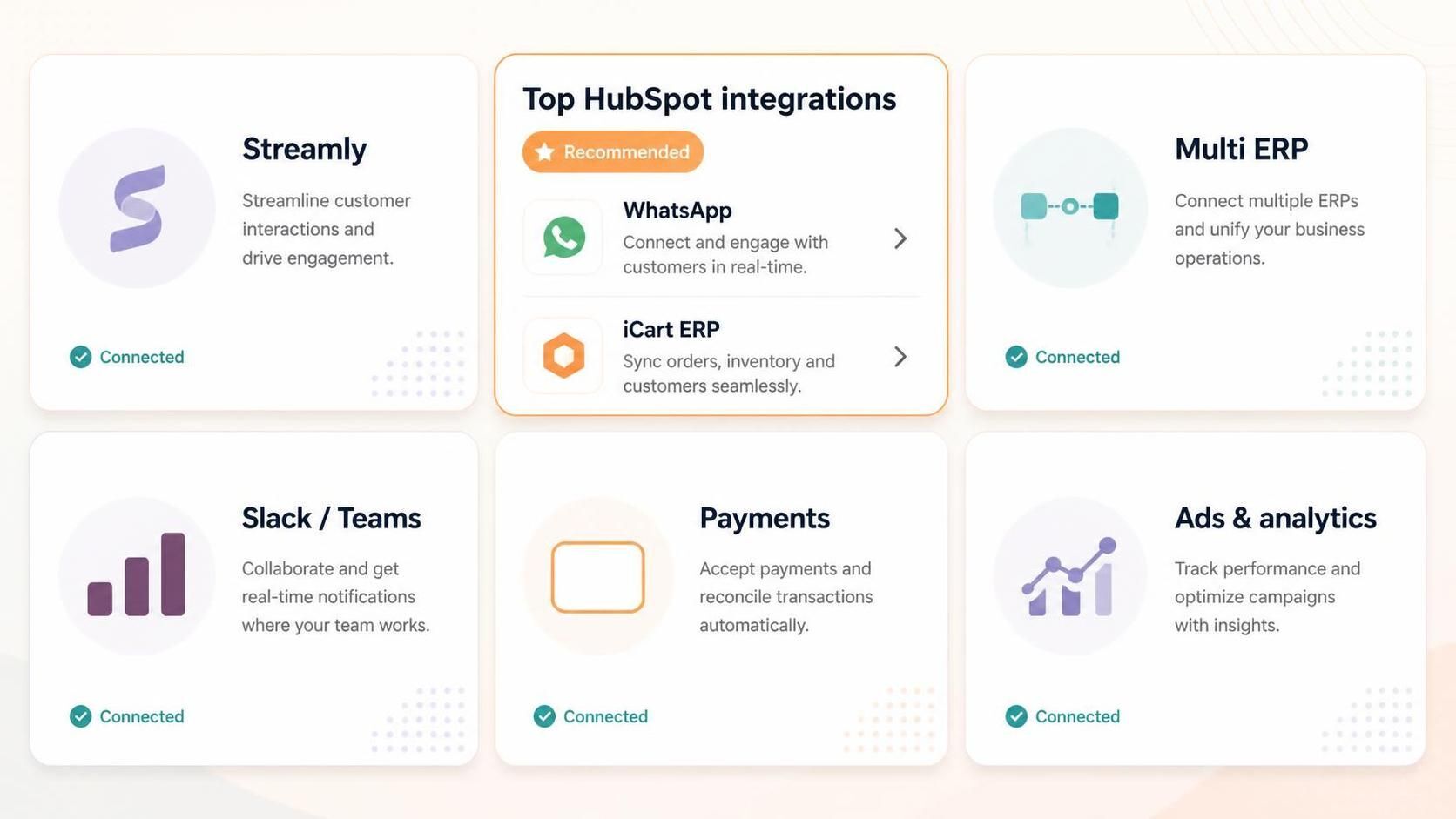
Shopify, WhatsApp, your ERP, chat tools, payments, and ad platforms, all feeding one CRM.
Shopify: Connect Your Store to Your CRM
If you sell online, connecting Shopify to HubSpot is one of the highest-value integrations there is. Orders and customers flow into HubSpot, so your marketing and sales work from real purchase behaviour, abandoned carts trigger follow-ups, and every customer has one profile that spans store and CRM.
For ecommerce, this pairing turns HubSpot into a genuine growth engine rather than a contact list.
WhatsApp: Meet Customers Where They Actually Are
More customers want to talk on WhatsApp than ever, and integrating it with HubSpot means those conversations are captured against the contact, automated where useful, and visible to your whole team. Instead of chats trapped on someone's phone, you get a channel that feeds your CRM and can be automated for orders, support, and follow-ups.
Your ERP or Accounting System
Connecting HubSpot to your ERP or accounting keeps sales and finance in sync. Deals that close flow toward invoicing, customer data stays consistent, and nobody re-keys the same information into two systems. For businesses where finance and sales currently live apart, this integration removes a lot of quiet friction.
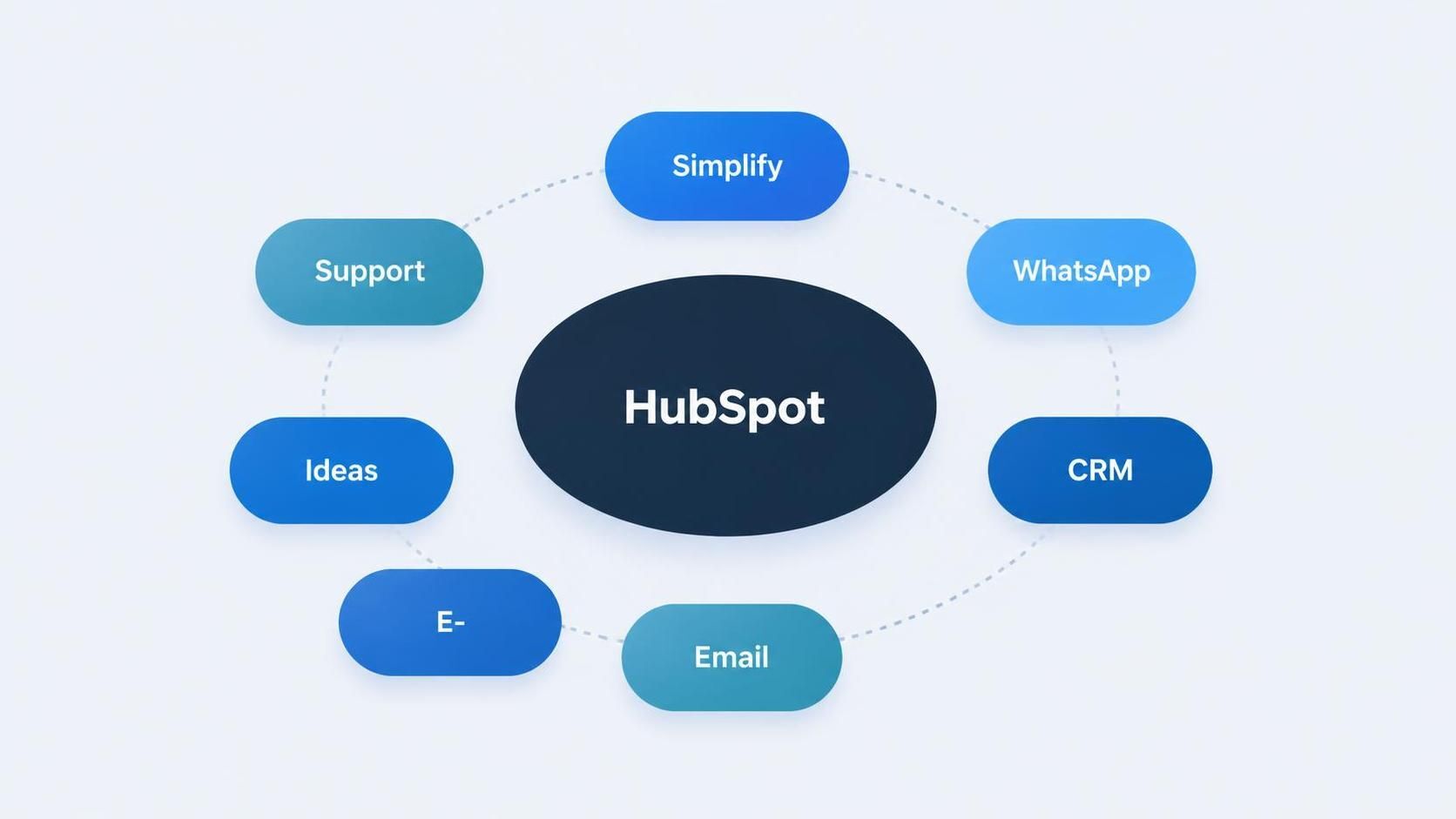
With the right integrations, HubSpot becomes the hub your whole business flows through.
Chat and Team Tools Like Slack or Teams
Connecting HubSpot to Slack or Microsoft Teams brings CRM activity into where your team already talks. A new lead, a won deal, or a stuck opportunity can surface in a channel automatically, so the team acts fast without living inside the CRM all day. It's a small integration that quietly speeds everything up.
Payments and Ad Platforms
Two more worth your attention. Connecting payment tools ties revenue directly to your CRM records, so you can see the money, not just the deal. And connecting ad platforms lets you close the loop between ad spend and actual revenue, so you finally know which campaigns produce customers rather than just clicks.
How to Choose Which to Set Up
You don't need every integration on day one. Start where the manual pain is worst, usually wherever someone is copying data by hand, and expand from there. The right set depends on how your business actually runs, not on a checklist of what's possible.
How Integrations Compound
The value of integrations isn't just additive; it compounds. Connect your store to HubSpot and you get purchase-based marketing. Add WhatsApp and those conversations join the same customer record. Connect your ERP and finance stops living apart. Each new connection makes the others more useful, because everything feeds one complete picture.
That's why it's worth thinking of integrations as building a connected centre rather than ticking off separate tools. Start with the one that removes the most manual pain, then add the next, and watch how each addition makes your CRM smarter. A fully connected HubSpot is worth far more than the sum of its individual integrations.
How Amwhiz Connects Your Stack
Amwhiz is a HubSpot partner, and we connect HubSpot to the tools your business runs on, Shopify, WhatsApp, your ERP, chat tools, payments, and ad platforms. We start with the integrations that remove the most manual work, build them to be reliable, and make HubSpot the hub your whole operation flows through.
The result is a CRM that isn't an island, but the connected centre of your business, with data flowing in from everywhere it matters.
Frequently Asked Questions
What's the most valuable HubSpot integration?
It depends on your business, but for ecommerce, Shopify is often the highest-value one. For customer-facing teams, WhatsApp is increasingly essential. Start where your manual pain is worst.
Do I need all these integrations?
No. Set up the ones that match how your business runs and remove real manual work. Adding integrations you won't use just creates complexity.
Can HubSpot connect to my ERP?
Usually yes, though the method depends on your ERP. Connecting it keeps sales and finance in sync and removes double entry between systems.
Does connecting WhatsApp to HubSpot help sales?
Yes. It captures conversations against contacts, lets you automate replies and follow-ups, and gives your whole team visibility instead of chats stuck on one phone.
Where should I start?
With the integration that removes the most daily manual work. Prove the value there, then expand to the next as your needs grow.
The Short Version
The HubSpot integrations worth considering in 2026 include Shopify, WhatsApp, your ERP or accounting, chat tools, payments, and ad platforms. Together they turn HubSpot from an isolated CRM into the hub your whole business flows through. Start where the manual pain is worst and expand deliberately.
Book a free HubSpot integration consultation.
Amwhiz will connect HubSpot to the tools your business runs on. Visit amwhiz.com or email sales@amwhiz.com.