-1.png?width=134&height=66&name=amwhiz-logo%20(1)-1.png)


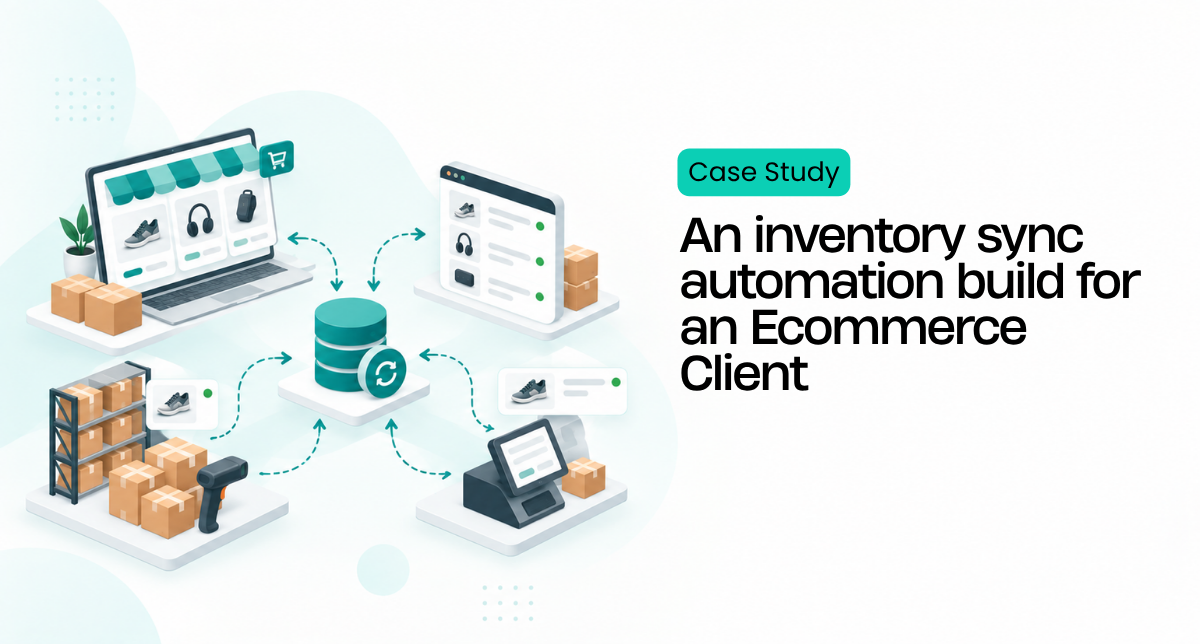

Quick answer: An ecommerce client with an established Shopify catalog needed an automated way to synchronize inventory from a new wholesale drop-ship supplier, without disturbing their existing local inventory. Amwhiz proposed custom middleware with variant-level matching logic, scoped as a real API integration project rather than a generic app installation.
What Was the Brief?
The client needed an experienced Shopify automation and API developer to build an automated inventory synchronization solution between a wholesale supplier and their Shopify store. Their store already contained an established catalog of products and variants, and they were adding a second inventory source to support drop shipping while keeping their existing local inventory intact.
The goal was to automatically synchronize inventory quantities from the supplier into Shopify while preserving the current product catalog and variant structure. Specific requirements included:
- Automatically retrieving inventory from the supplier's API
- Matching supplier products to existing Shopify products
- Matching supplier inventory to the correct Shopify variant
- Updating inventory only at the designated drop-ship inventory location, leaving local inventory untouched
How Did Amwhiz Approach the Project?
Multi-source inventory synchronization with variant-level matching logic is exactly the kind of API integration work Amwhiz takes on, not a generic app-install task.
The proposal drew on directly comparable past integration work:
- A large-catalog fashion migration project — migrated the full product catalog and existing order history from Lightspeed to Shopify using the REST API, handling product and variant mapping so nothing broke on the new platform.
- Zoho Inventory to Shopify synchronization — built for live retail operations, including composite item logic where finished goods map to combinations of underlying stock, conceptually similar to the grade-combination matching this client needed.
Given that this was a business problem rather than a platform mandated by the client, Amwhiz leaned toward custom middleware, such as a lightweight serverless function on AWS Lambda or similar, rather than routing everything through a general-purpose integration platform. That approach gives more precise control over matching logic and where inventory writes are scoped.
What Did the Proposed Solution Look Like?
The proposed architecture included four connected pieces:
- A scheduled or webhook-triggered pull from the supplier's API
- A matching engine that maps supplier SKUs to Shopify variants using the client's color, carrier, and storage rules
- Grade-quantity aggregation logic before writing to Shopify
- Writes scoped only to the client's designated drop-ship inventory location, through Shopify's location-specific Inventory API, so the client's local inventory location stays untouched
What Results Did the Build Aim to Deliver?
- Reduced manual work through automated, reliable data flow between systems
- More accurate, real-time inventory visibility across sales channels
Conclusion
By scoping the work precisely against the brief and drawing on directly comparable past projects, Amwhiz helped move the engagement from an unfinished brief to a professional, ready-to-launch result.
Frequently Asked Questions
How do you sync inventory from a wholesale supplier into Shopify without breaking the existing catalog?
The supplier's products need to be matched to existing Shopify products and variants first, using a defined matching rule set, and inventory writes should be scoped to a specific location so the existing catalog and local inventory data stay untouched.
Should inventory sync be handled with an app or custom middleware?
It depends on the complexity of the matching logic. A standard app often works for straightforward one-to-one product matching, but variant-level matching, grade-quantity aggregation, or location-scoped writes generally call for custom middleware built around the business's specific rules.
Can inventory updates be limited to a specific Shopify location?
Yes. Shopify's Inventory API supports location-specific inventory writes, which makes it possible to update a drop-ship inventory location automatically while leaving a business's local inventory location completely untouched.
Start Your Shopify Automation Project
Need inventory from a new supplier synced into Shopify without disrupting your existing catalog? Connect with Amwhiz to scope an integration tailored to your setup.
Email: sales@amwhiz.com | Phone: +91 91500 65500