-1.png?width=134&height=66&name=amwhiz-logo%20(1)-1.png)


Overview For any established eCommerce business, a website migration is one of the most critical...

written by: Leo Kaiser Anto
WordPress to Shopify migration,
Multi-domain Shopify store replication,
Custom Shopify theme development,
Reusable Shopify theme sections and snippets,
Shopify SEO migration without losing rankings
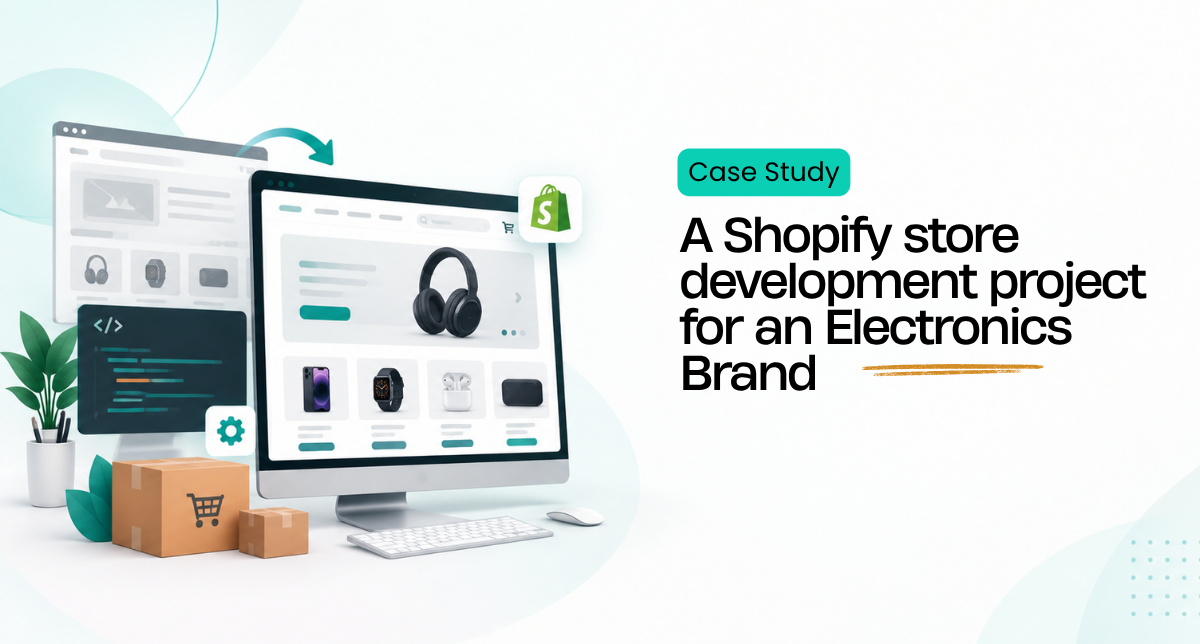
Quick answer: An electronics brand needed to migrate its ecommerce site from WordPress to a fast, scalable, fully custom Shopify store, then replicate that same store across three additional domains for sister companies with different branding. Amwhiz scoped this as two connected layers, a WordPress-to-Shopify migration and a reusable multi-domain build, both of which the team handles regularly rather than as new territory.
What Was the Brief?
The client needed an experienced Shopify developer for their ecommerce website, then running on WordPress. They were considering a move to Shopify and needed someone who could build a fast, scalable, and fully customized store.
The core requirements included:
- Custom Shopify theme development
- Shopify apps and API integrations
- Reusable sections and snippets
- Clean, optimized, SEO-friendly code
- Performance optimization
- WordPress migration experience (preferred)
The client was looking for a long-term developer and asked for examples of relevant past Shopify projects, along with experience and rate, before proceeding. A second requirement emerged alongside the core build: the site needed to be replicated across three separate domains belonging to a sister company, each with its own color theme, logo, and contact details, fully uploaded and checked for errors before launch.
How Did Amwhiz Approach the Project?
This project had two distinct layers: a WordPress-to-Shopify migration, and a replicable multi-domain store setup for sister companies. Amwhiz has handled both before, not as separate learning curves but as work the team does regularly.
The proposal drew on directly comparable past work:
- A nine-store Shopify Plus rollout across the GCC, UK, USA, Qatar, KSA, UAE, Jordan, and the EU — directly relevant to the client's three-domain sister company replication, since it required building a store architecture that could be reused consistently across markets.
- A premium activewear brand in Australia and New Zealand — a custom Dawn theme built with reusable, schema-driven sections and shipping API integration, making the "reusable sections and snippets" requirement in the brief core to how Amwhiz already builds Shopify themes.
- A large-catalog fashion migration from Lightspeed — handled with SEO preservation in mind, giving the team a clear understanding of the risks and checks needed when moving a live store to a new platform without losing rankings or sales continuity.
How Was the Migration and Multi-Domain Build Planned?
For this project specifically, the work was broken into four connected stages:
- WordPress migration: audit the client's current WooCommerce or WordPress product, category, and content structure first, then map it cleanly into Shopify's data model, preserving URLs and redirects where possible to protect existing SEO.
- Custom theme build: built from reusable sections and snippets from day one, so replicating the store across the client's three sister domains later becomes a branding and content swap rather than a rebuild.
- Multi-domain replication: once the base theme is built and approved on the primary store, duplicating it across the three additional domains with updated colors, logos, and contact information is fast, since the architecture is reusable by design.
- Performance and SEO: clean, optimized code, proper meta structure, and a full QA pass across all four stores before considering anything launch-ready, catching upload errors and inconsistencies before they go live.
What Results Did the Project Aim to Deliver?
The proposed build was scoped to deliver measurable improvements across performance, SEO, and long-term scalability:
- SEO fundamentals in place to support organic visibility without disrupting existing rankings
- Faster page load times supporting both user experience and search performance
- Reduced manual work through automated, reliable data flow between systems
- A foundation built to scale as the catalog and business grow
Conclusion
By scoping the work precisely against the brief and drawing on directly comparable past projects, Amwhiz helped move the engagement from an unfinished brief to a professional, ready-to-launch result across all four stores.
Frequently Asked Questions
How do you migrate an ecommerce store from WordPress to Shopify without losing SEO rankings?
A clean migration starts with auditing the existing product, category, and content structure, then mapping it into Shopify's data model while preserving URLs and setting up redirects, so existing search rankings carry over rather than resetting after launch.
Can one Shopify theme be replicated across multiple store domains?
Yes, if the theme is built with reusable, schema-driven sections and snippets from the start. That approach turns replicating the store for a sister brand or additional domain into a branding and content swap rather than a full rebuild.
What should be checked before launching a multi-store Shopify rollout?
Each store should go through a full QA pass covering branding accuracy, contact details, meta structure, page performance, and upload errors, checked individually across every domain before any of them are considered launch-ready.
Is WordPress migration experience important when hiring a Shopify developer?
Yes, particularly for stores with existing organic traffic. A developer with WordPress-to-Shopify migration experience understands how to preserve URL structure, redirects, and content mapping, which reduces the risk of losing search visibility during the move.
Start Your Shopify Build
Ready to migrate to Shopify or replicate your store across multiple domains? Connect with Amwhiz to scope a build tailored to your goals.
Email: sales@amwhiz.com | Phone: +91 91500 65500