-1.png?width=134&height=66&name=amwhiz-logo%20(1)-1.png)


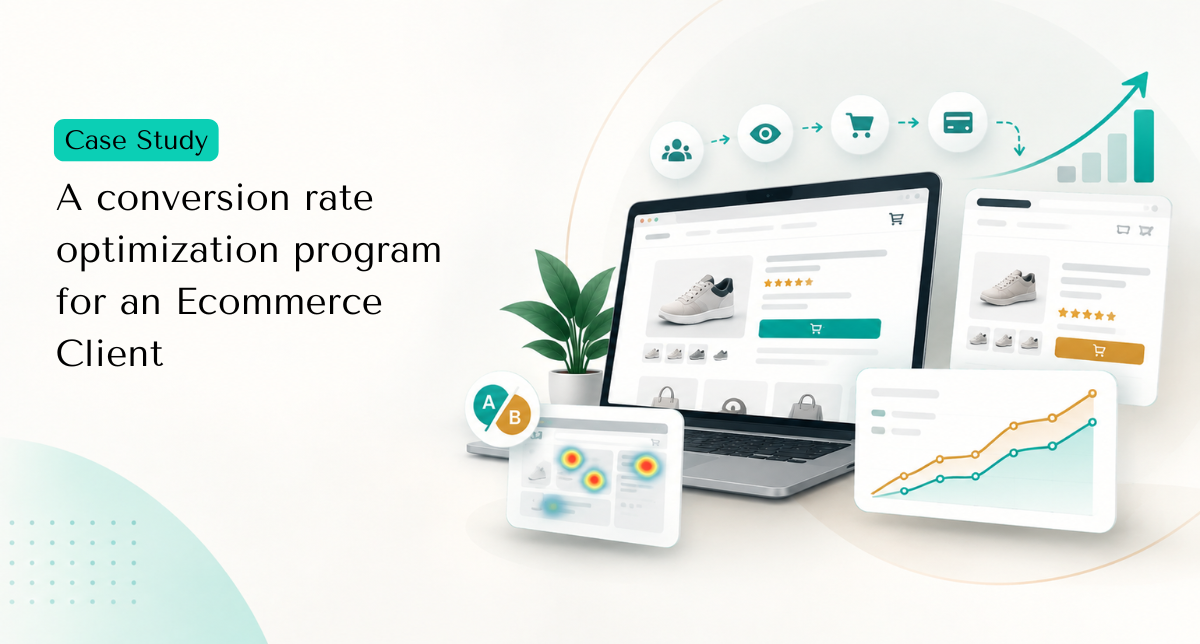

Quick answer: An ecommerce brand needed a single Shopify specialist who could handle theme development, product merchandising, and conversion rate optimization together, rather than splitting the work across separate vendors. Amwhiz scoped the brief against directly comparable past projects and delivered a plan covering mobile performance, Core Web Vitals, and checkout-friction reduction.
What Was the Brief?
The client needed a Shopify developer and CRO specialist who could work across three areas at once: theme customization, product and catalog management, and conversion-focused improvements. Rather than treating these as separate hires, the brief called for one team that could own the full storefront experience end to end.
The core requirements included:
- Custom Shopify theme development using Liquid, HTML, CSS, and JavaScript
- Full product and catalog management, including titles, descriptions, pricing, variants, collections, SKUs, inventory, and SEO metadata
- Product page optimization to improve user experience and conversion rates
What Problems Was the Client Trying to Solve?
Three issues were holding the store back: weak mobile performance, slow page speed, and a checkout experience that wasn't reducing cart abandonment.
Specifically, the brand needed to:
- Improve mobile responsiveness and overall site performance
- Raise PageSpeed scores and Core Web Vitals
- Apply CRO best practices such as sticky Add-to-Cart buttons, trust badges, FAQs, reviews, and cart optimization
How Did Amwhiz Approach the Project?
Amwhiz treated theme development, merchandising, and CRO as one connected discipline rather than three separate workstreams, since that combination is how the team already operates on Shopify projects, not a new arrangement assembled for this brief.
The proposal was scoped against directly comparable past work rather than built from a generic template:
- House of Even — a modular jewelry brand where the goal was reducing cart abandonment and improving product discoverability through metafield-driven recommendations, collection restructuring, and checkout friction analysis.
- A nine-store Shopify Plus rollout across the GCC — managing theme customization, product and catalog management, and SEO metadata at scale across nine linked storefronts.
- A premium activewear brand in Australia and New Zealand — a custom Dawn theme build with shipping API integration, focused on speed and Core Web Vitals.
- A large-catalog fashion migration — structuring close to a million products with clean tagging and metafields, making catalog organization and merchandising at scale familiar territory.
What Does Amwhiz's CRO Process Actually Look Like?
Amwhiz doesn't treat trust badges and sticky Add-to-Cart buttons as a checklist to apply everywhere. The team looks first at where real friction is happening on a given store, whether that's page speed, unclear product information, or cluttered navigation, and prioritizes fixes by their likely impact on conversion rather than by how commonly they appear in CRO guides.
Amwhiz also took ownership of the full scope rather than handing pieces off separately, covering development, merchandising, QA, and performance monitoring without requiring heavy client oversight. As an early step, Amwhiz asked to review the client's live store directly, so the team could flag a few quick CRO or performance observations before formal work began.
What Results Did the Program Deliver?
The proposed program was built to deliver measurable improvements across the shopping experience, not just a cosmetic redesign:
- A smoother, friction-reduced shopping and checkout experience aimed at improving conversion
- A consistent, fast experience for mobile shoppers, where the majority of traffic typically lands
- SEO fundamentals in place to support organic visibility without disrupting existing rankings
- Faster page load times supporting both user experience and search performance
- More accurate, real-time inventory visibility across sales channels
Conclusion
By scoping the work precisely against the brief and drawing on directly comparable past projects, Amwhiz helped move the engagement from an unscoped brief to a professional, ready-to-launch plan.
Frequently Asked Questions
What is Shopify conversion rate optimization (CRO)?
Shopify CRO is the practice of identifying and fixing the specific points of friction, such as slow page speed, unclear product information, or a difficult checkout, that stop visitors from completing a purchase, rather than applying generic best practices without evidence of where they'll help.
Does a Shopify CRO project need a separate developer and merchandiser?
No. Theme development, product merchandising, and conversion optimization are more effective when handled by one team that understands how the three interact, since a change to product data or catalog structure often affects page speed and conversion just as much as a theme change does.
What CRO improvements does Amwhiz typically prioritize first?
Amwhiz starts by identifying where actual friction occurs on a given store, commonly page speed, unclear product information, or cluttered navigation, and prioritizes fixes based on likely impact on conversion rather than working through a generic checklist.
Can Amwhiz manage a multi-store Shopify Plus setup?
Yes. Amwhiz has managed a nine-store Shopify Plus rollout across the GCC, covering theme customization, product and catalog management, and SEO metadata across all stores.
Start Your Shopify Build
Ready to turn your brand vision into a conversion-focused storefront? Connect with Amwhiz to scope a build tailored to your goals.
Email: sales@amwhiz.com | Phone: +91 91500 65500